
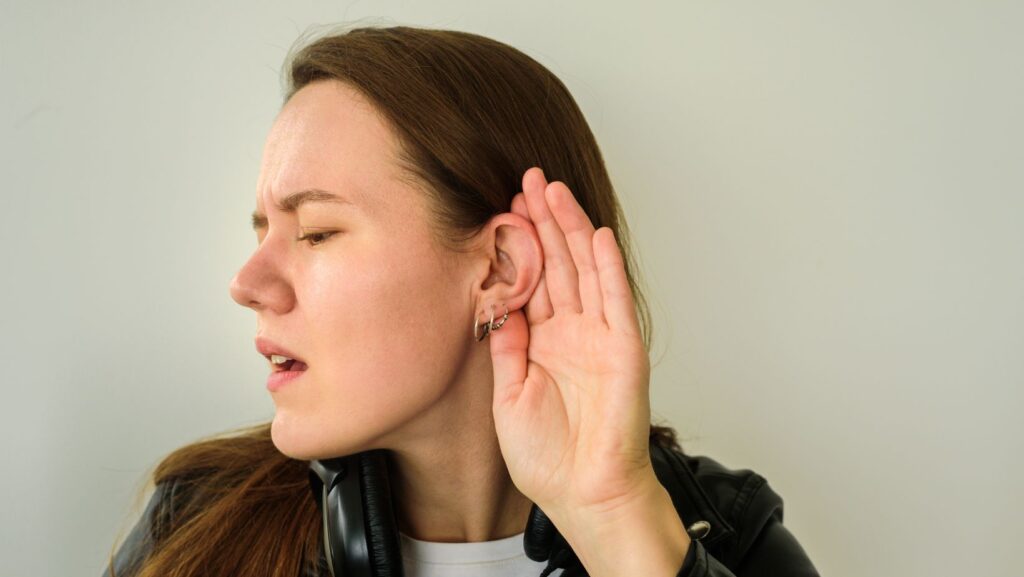
London has a particular kind of background soundtrack. It’s not just “city noise” in the abstract—it’s the shriek of the Central line braking, scaffolding clattering on a pavement, a siren ricocheting between buildings, and three different conversations happening at once in a café. Most Londoners learn to tune it out. The problem is that your ears can’t always do the same.
Hearing strain in a city like London often builds quietly. It doesn’t always show up as obvious ringing or sudden muffling. More commonly, it looks like subtle fatigue at the end of the day, needing to concentrate harder in meetings, or realising you’ve started asking people to repeat themselves—especially in busy places. If any of that sounds familiar, you’re not imagining it. Urban living can put real, cumulative pressure on your hearing system.
Why London’s soundscape is uniquely demanding
Noise isn’t just “loud”—it’s constant and complex
We tend to think hearing damage comes from a single big event: a concert too close to the speakers, a night out that leaves your ears buzzing. Those moments matter, but city exposure is often about duration and repetition. The World Health Organization’s guidance is a useful yardstick here: sustained exposure around 85 dB can become risky over time, and the safe exposure window shrinks fast as volume increases.
London’s challenge is that many everyday environments flirt with that “too much, too long” threshold:
- Tube platforms and trains can be surprisingly intense, especially at certain stations and older lines.
- Major roads and bus corridors create a low-level roar that never fully switches off.
- Construction work is effectively seasonal in London—except the season is “all year”.
Even when the average level isn’t extreme, the variability can be tiring: sudden peaks (sirens, brakes, drilling) force your auditory system to keep recalibrating.
The “listening effort” problem
A lot of hearing strain isn’t about volume alone—it’s about clarity. When the environment is noisy, your brain works harder to separate speech from background sound. Audiologists sometimes call this listening effort, and it’s one reason people can feel wiped out after a day of meetings in open-plan offices or after socialising in a loud restaurant.
If you’ve ever thought, “My hearing’s fine—I just hate noisy places,” that may be your brain signalling that it’s doing extra work to keep up.
The everyday London habits that quietly raise risk
Commuting + headphones: the stealth combination
Noise exposure is additive. A loud commute in the morning, followed by hours in an office with constant chatter, followed by music on the walk home—none of it may feel dramatic in isolation. Together, it can amount to a lot of auditory load.
Headphones complicate things because they can encourage you to “compete” with background noise. Many people unconsciously turn the volume up on the Tube or while walking beside traffic, then keep it there out of habit.
A practical rule of thumb: if someone beside you can hear your music clearly, it’s probably too loud. Noise-cancelling headphones can help because they reduce the temptation to crank the volume, but they’re not a free pass—you can still overdo it.
After-work socialising in reflective spaces
London’s best bars and restaurants often have hard surfaces—brick, glass, wood—designed for atmosphere, not acoustics. Add a full room and background music, and speech becomes harder to pick out. People respond by leaning in, raising their voice, and staying in that high-noise environment for hours.
Here’s a useful self-check: if you regularly find yourself scanning lips, guessing words, or feeling unusually tired after social plans, your hearing may be under more strain than you realise.
“It’s probably nothing” delays the obvious next step
Because the change can be gradual, many people put off getting their hearing checked. They adapt—choosing quieter venues, sitting in specific spots, pretending they caught what was said. The trouble is that the earlier you understand what’s going on, the more options you have.
If you want a clear baseline (and a reality check on whether you’re compensating without realising it), it can be worth booking with a clinic offering professional hearing evaluations in London. Think of it like an eye test: even if nothing urgent is wrong, you learn where you stand.
Early signs of hearing strain Londoners often miss
It’s not just volume—it’s clarity and stamina
Hearing issues aren’t always experienced as “quietness.” Some of the most common early clues are more about perception and energy:
- Conversations feel harder to follow in groups, but one-to-one is fine.
- You hear people speaking but miss parts of words, especially consonants.
- Background noise feels “aggressive” or overwhelming.
- You feel drained after workdays heavy on calls and meetings.
- You keep turning the TV up, then down when ads come on.
Tinnitus (ringing, buzzing, hissing) can also appear after noise exposure. If it’s persistent or worsening, it’s worth taking seriously rather than hoping it fades.
The social knock-on effects are real
One of the most underestimated impacts is behavioural. People often start avoiding noisy settings, not because they don’t enjoy them, but because they’re tiring or embarrassing. Over time that can chip away at confidence—particularly in work contexts where fast conversation matters.
The sooner you notice that pattern, the easier it is to address.
Protecting your hearing without giving up London life

Small changes that make a measurable difference
You don’t need to live in silence (and in London, you couldn’t even if you tried). The goal is to reduce unnecessary exposure and give your ears recovery time. A few grounded, realistic strategies:
- Carry discreet ear protection for gigs, clubs, and particularly loud pubs. High-fidelity earplugs reduce volume without turning music into mush.
- Use noise-cancelling wisely to keep headphone volume moderate on commutes.
- Take “quiet breaks”—even 10 minutes away from noise helps your auditory system reset.
- Mind the weekly total, not just single events. A loud Saturday can be manageable; a loud Saturday plus loud commuting plus loud workouts adds up fast.
- Choose acoustics when you can: corners away from speakers, booths, and venues with softer furnishings can be easier on your ears.
None of these require you to opt out of the city; they just stop the city from taking more than it should.
Make hearing checks part of adult maintenance
London encourages a certain toughness: get on with it, walk faster, don’t make a fuss. But hearing is one area where “waiting until it’s bad” is a poor strategy. Establishing a baseline, especially if you’re often around noise, can help you spot changes early and act while options are simplest.
Your hearing supports everything from relationships to performance at work. In a city that’s always on, protecting it isn’t precious—it’s practical.
The bottom line
London’s noise doesn’t just threaten hearing through rare, extreme events. It’s the daily layering—transport, work, social life, headphones—that creates the hidden strain. The good news is that small, consistent choices make a big difference, and a straightforward check can replace guesswork with clarity.
You can love London’s energy without paying for it with your hearing. The trick is noticing the pressure early—and responding before it becomes your new normal.