
Start With Your Story, What Eye Symptoms And Health Changes Are Really Worrying You
From the experience of Yamini Attiku, board-certified ophthalmologist in Southwest Florida, women who search for an ophthalmologist in Naples rarely start with medical terms like medical retina or uveitis. They start with lived experiences. You might notice that lights have starbursts around them when you drive home from an evening gathering. You might see new floaters drifting across your vision or feel a deep ache around the eye that does not match a simple dry eye. You might simply sense that your sight is not keeping up with the rest of your active midlife.
Ophthalmologist visits in this season of life often happen in the middle of other health shifts. Hormones are changing. Autoimmune symptoms may be surfacing or flaring. Blood sugar or blood pressure numbers may be creeping upward. Each of these whole-body changes can quietly set the stage for eye problems such as retinal disease or uveitis, which is inflammation inside the eye.
One powerful idea is that your eye story and your hormone story are not separate chapters. They are different pages in the same book. When you sit down with an ophthalmologist, starting with that full story gives the doctor a better chance to protect your vision.
Learn The Basics Of What An Ophthalmologist Does For Retina And Uveitis Problems
An ophthalmologist is a medical doctor trained to diagnose and treat eye diseases, including complex conditions that affect the retina and the uvea, the middle layer of the eye where uveitis occurs. The retina is the light-sensitive tissue lining the back of the eye. It turns light into electrical signals that travel through the optic nerve to the brain. When disease damages the retina, the result can be blurred vision, blind spots, or even permanent vision loss.
Medical retina is the subspecialty devoted to diagnosing and treating diseases of the retina with medicines, lasers, and injections rather than major surgery whenever possible. Typical conditions managed in medical retina clinics include age-related macular degeneration, diabetic retinopathy, vein occlusions, and some inherited retinal disorders.
Uveitis describes inflammation of the uvea and sometimes nearby structures. It can cause redness, pain, light sensitivity, floaters, and blurred vision, and it may come from infections, autoimmune conditions, or be idiopathic, meaning no clear cause is found. A medical retina and uveitis specialist is trained to look for these patterns, order targeted tests, and guide treatment using steroids and other immune-modulating medicines.
A quotable statement is that the medical retina looks after the wiring at the back of the eye, while uveitis care calms the fire in the eye’s middle layer so that wiring can keep working.
Connect The Dots: How Hormones, Autoimmune Disease, And Eye Inflammation Overlap For Women Over 40?
Women in midlife often live at the crossroads of hormonal change and immune change. Research shows that most autoimmune diseases are more common in women than in men, and that sex hormones such as estrogen influence immune responses. Studies of uveitis and ocular inflammation have found a greater preponderance of many noninfectious uveitis types in women, especially when the condition is linked to systemic autoimmune disease.
Hormonal transitions such as perimenopause and menopause can shift immune behavior, which may change the course of some inflammatory eye conditions. Reviews of noninfectious uveitis note that sex hormone fluctuations during pregnancy and the postpartum period can alter disease activity, underscoring the link between hormone environment and eye inflammation.
For women over forty, this science carries a simple but profound message. If you live with autoimmune disease, metabolic syndrome, or hormonal diagnoses such as polycystic ovary syndrome, your eyes deserve the same level of attention as your joints, thyroid, or blood sugar. An ophthalmologist who understands medical retina and uveitis can help watch for early signs that inflammation is reaching the eyes.
One memorable statement is that uveitis can be the eye’s way of whispering that the immune system and hormones are out of balance long before the rest of the body feels heard.
Meet Your Options, Medical Retina Testing, And Treatments You Can Expect At The Eye Clinic
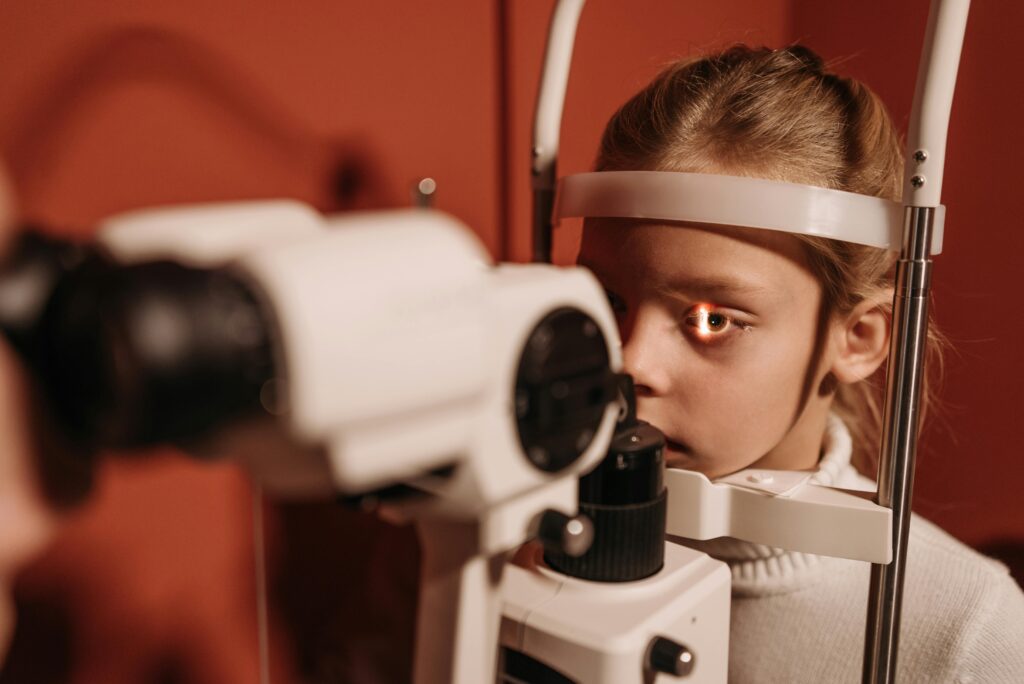
When you visit an ophthalmologist with possible retina or uveitis symptoms, the exam usually goes beyond a basic vision check. After a detailed history, your pupils are dilated so the doctor can examine the retina and the uvea directly. Imaging tests such as optical coherence tomography, which uses light waves to create cross-sectional pictures of the retina, and fluorescein angiography, which tracks dye through retinal blood vessels, help map swelling, leakage, or damage.
If medical retina disease is found, treatments can include eye injections of anti-VEGF medicines for wet macular degeneration or diabetic macular edema, laser therapy to seal leaking blood vessels, and oral or topical medicines. Uveitis treatment often starts with steroid eye drops or injections inside or around the eye. When inflammation is severe, recurrent, or linked to systemic autoimmune disease, nonsteroidal immunosuppressive drugs or biologic therapies may be added in coordination with rheumatology or internal medicine.
A key health message is that early, targeted treatment can often control retinal disease or uveitis before permanent scarring develops. That is why recognizing symptoms and getting to a medical retina specialist promptly matters so much.
See Who Is On Your Side. How Eye Clinics Support Women With Medical Retina And Uveitis Needs
In Southwest Florida, Frantz EyeCare provides comprehensive ophthalmology services at multiple locations, including Naples, with care that ranges from routine exams to cataract treatment, cornea care, and diabetic eye care. Within this network, Yamini Attiku, MD, practices as a medical retina and uveitis specialist, offering care for inflammatory and degenerative diseases of the back of the eye and for uveitis.
Medical retina and uveitis subspecialists like Dr Attiku evaluate conditions such as macular degeneration, diabetic eye disease, retinal tears and detachments, and inflammatory disorders that cause flashes, floaters, and eye pain. They can coordinate with other clinicians when systemic autoimmune disease, hormone therapy, or metabolic conditions are part of the picture, which is often the case for women in midlife.
In her approach, Yamini Attiku, MD, emphasizes the connection between specialized eye care and whole-person care. A generalized way she might express this is, “At Frantz EyeCare, we treat medical retina and uveitis as part of a woman’s overall health story, using our subspecialty training to connect what we see in the eye with what is happening in the body.”
A quotable insight is that when a retina and uveitis specialist looks into your eyes, they are not just checking vision. They are reading how inflammation and metabolism are expressed in living tissue.
Ask Better Questions About What To Say In Your First Visit, So You Leave With Clear Next Steps
Walking into a subspecialty clinic can feel intimidating, especially if you already live with complex health issues. Preparing a few straightforward questions turns that visit into a true partnership. You might ask what exactly the doctor sees in the retina or uvea, whether there is any sign of diabetic damage, autoimmune inflammation, or infection, and how serious the findings are for your long-term vision.
Evidence-based eye care guidelines stress the value of clear communication and shared decision-making, especially for chronic conditions that will require ongoing monitoring and treatment. Asking what each proposed test or treatment is meant to show, which side effects to watch for, and how to coordinate follow-up with your other doctors can help you feel informed rather than overwhelmed.
Another helpful question is how hormonal milestones or immune diagnoses you already carry might influence your eye condition. Given the known links between sex hormones, autoimmune disease, and uveitis activity, it is reasonable to ask directly whether menopause, pregnancy history, or hormone therapy may matter for your particular case.
A memorable statement is that the best retina and uveitis questions are not the fanciest ones. They are the ones that help you see clearly what is happening now and what comes next.
Think Long-Term. How Partnering With One Ophthalmologist Can Protect Your Sight Through Midlife And Beyond?
Retinal disease and uveitis often unfold over years, not days. Diabetes, hypertension, autoimmune disease, and hormonal transitions all evolve across the same timeline. Long-term partnership with an ophthalmologist in Naples who understands medical retina and uveitis allows patterns to emerge that would be easy to miss in one-off visits.
Regular dilated eye exams give your doctor repeated snapshots of the retina and uvea. Over time, those snapshots form a movie that reveals whether treatments are working, whether new areas of damage are appearing and how your eyes respond to broader health changes such as new medications or hormone therapy.
For women over forty, this continuity matters even more. Autoimmune diseases and diabetic complications often appear or accelerate in these years, and research suggests that diabetic retinopathy and other retinal changes can be strongly linked to metabolic factors such as blood sugar levels and waist circumference in adults over forty-five.
One final statement is that protecting your retina in midlife is not a vanity project. It is one of the most practical investments you can make in staying independent, mobile, and fully engaged with the people and causes you care about.
When you choose an ophthalmologist who can guide medical retina and uveitis care with an eye on your hormones, your immune system, and your whole life, you are not just saving sight. You are choosing clarity in every sense of the word.