

We can discuss trust in many different ways, especially if we are to make the discussion more philosophical. It’s a matter of recognizing when it works as a currency or as a method of genuine human connection. In many cases, we see a fusion of perspectives across various purposes.
The context of gambling is, at its core, a genuinely fascinating experience. Not only is it a billion-dollar industry, per the latest Statista gambling market estimate, but it’s also a phenomenon that has entered many a discourse topic in the public field.
Given that its status as a ubiquitous social experiment with immense implications has led many to talk about it, we should tackle it from one of the most fascinating perspectives. Namely, we ought to discuss the relationship between gambling and association football, one of its main marketing playing fields.
Many find it inevitable because of the broad interest in betting by the public, while others believe it to be textbook parasitic. It’s fascinating in many ways, but the aspect of the token that we know as trust may be the most important.
In this article, we will talk about why gambling brands have been so keen on striking partnerships with clubs, leagues, and players. There are many circumstances at hand, and it’s certainly worth looking into them as analytically as possible!
The importance of trust in gambling branding
We should begin with an idea of trust in branding as a whole.
Simply put, trust brings certainty and nudges any consumer into a decision that means spending. Rather than having doubts and concerns, any potential customer decides that investing their money in a product or service will yield the desired results with minimal risks.
Namely, it’s a method to quantify whether there is any feasible security. One’s financial security often depends on making calculated decisions, and the difference between good and poor choices is highly reliant on a proven track record and a good reputation.
We’ve seen plenty of newcomer brands trying to attach themselves to more authoritative institutions, a topic we’ll cover in the next section. For gambling, it’s all about making sure that the purported nature of wagered money is under fair terms, as BetBrain has found when analyzing its user behavior.
Chance ought to be chance, while the opportunity to receive payout must be met with unbroken trust and proper services. Given that gambling has a reputation for financial volatility and a name that goes hand-in-hand with risk, the minimization of questions is a matter of brand survival for gambling companies.
The psychology of transferring trust

Football, like any other sport, still holds an inherent purity because of its status as a universal activity predicated on humane principles. Unity, joy, competitiveness, solidarity, factionalism, and so on. They’re all methods of connection between concrete aspects (the game itself, as a physical activity) and the entertainment nature of it.
Given that it generates monstrous revenue and is, after all, a sport, many brands have given themselves the opportunity to profit from it. Talbot’s groundbreaking deal with Coventry City opened the floodgates in the UK, just like Gold Leaf’s partnership with Lotus F1, which proved that using a sport for the sake of imagery is extremely effective.
The concept of trust transfer is simple: a trustworthy entity (a football club) can lend its credence and authority to a less or non-trustworthy one (the gambling brand). Surely your favorite club wouldn’t partner with a shady company, would it?
This has been the principle that has worked so genuinely at first, even if there have been plenty of abuses on this front. The tobacco industry ultimately lost this marketing avenue due to the toxic nature of its product.
Gambling feels at the precipice, but it has already achieved its objective of becoming a worldwide phenomenon by embedding itself in the experience of consuming sports like association football.
Commercial effectiveness factors
Nowadays, kit football sponsorship is more of a launch pad for gambling companies trying to find their footing in markets that generally have their own giants. The UK, the USA, and many other smaller local jurisdictions have very split market shares because of the maturing consumer base, not to mention the universal nature of betting.
In this instance, we may ask ourselves what exactly is at play. Is there a need for a baseline, or is it a way to ensure the consumer’s attention span doesn’t lapse?
Competition in the gambling market is hardly a zero-sum game, especially given how aggressively this industry has been expanding. That is, if prediction markets do not continue to soar dramatically and eat into gambling company capital.
In the following subsections, we will discuss several factors that contribute to the importance of football as a trust-building mechanism for the firms in this field.
Universal presence creating normalization
Do you remember that saying that a lie told enough times eventually becomes the truth? It’s the same principle, but…with less lying. It’s a nebulous angle, and we are not accusing anyone of anything.
It’s a matter of adapting to something psychologically, learning to cohabitate with it, especially if it isn’t existential threatening.
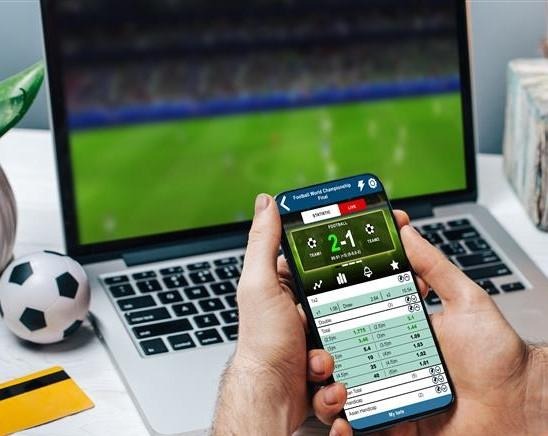
In simple terms, seeing a barrage of betting firms all around, from billboards to infomercials to football kits, opens the door to normalizing gambling. This way, it has become something that we all see, reckon with, and may even enjoy. Something inherent to our daily lives is almost impossible not to win our tacit trust.
Competitiveness creativity
If you want to be a company with good branding, you need a series of indicators that activate certain human senses. The logo is a very good start, especially if you know that the logo will appear on the kit of a club.
As we know already, football kits have become fashion statements, which enhances the visual value of a product that fans buy in swaths. If the logo of the betting company looks good on the shirt, it’s more likely that the same fans will associate it with a positive overall image.
When it comes to competitiveness, the club itself is also highly important. The more exposure there is in big leagues and international competitions, the better it is for the status of a sponsoring gambling firm. It’s a matter of prestige transfer, not just trust.
Additive activities tied to the football experience
Lastly, we must mention the fact that people do actually enjoy betting for multiple reasons. Making money is an obvious element here, but there’s also a part in which correctly wagering picks also brings a level of self-validation. Being right generally feels good, especially if it brings money.
We can talk about the erosion of the pure meaning of football, but the involvement with gambling has brought many more eyes to the games. This is why many watch the games of teams they don’t even remotely support, just for the sake of betting on something that they have a slight idea about.
Trusting your eyes for the sake of educated betting is a responsible outcome. If the gambling platform provides a direct connection to the sports product on the pitch, it invites partnerships that boost the factors that we’ve previously talked about in this article.
Shifting trends and the current position
The discussion can move in various angles about the dangers of gambling exposure, especially in a sport that countless children watch. Minor gambling is a rising tide, especially given the lack of effective guardrails that would guard them from accessing gambling at online casinos.
In the UK, the jurisdiction where the most profitable and valuable football league takes place, there is already an issue caused by the effects of enforced bans. After a definitive ban on gambling sponsorships on kits, there are financial ramifications.
Per a Guardian article on sponsorship voids in the Premier League, this gambling ban will likely lead to clubs starting the season without contracts. Nine of the twenty clubs face these prospects, showcasing another crease in the topic: overreliance.
Trusting gambling firms as commercial partners may be running its natural course, and new 2026-coded developments will prove if there is sustainability in how betting companies partner with football entities.
Conclusion
If you are the type of person who actually enjoys betting, you may find bans heavy-handed, but the danger of exposure is real. However, as we’ve said, the objective of creating a normalized environment has already been achieved, demonstrating the effectiveness of this strategy.
Given the potential problem that gambling can cause, we recommend not being overly trusting. Stay sharp, be careful, and bet responsibly!