There are quite a few options when it comes to going for gambling (or gambling-adjacent) activities that we can easily consider as alternatives. There are quite a few occasions when the reality of playing games of luck will follow you in a way that is conducive to highly interesting entertainment.
You can always rely on the online gambling industry to find new avenues to convince you to play. They can do as much, especially in an age that implies an increasing number of gambling regulations set against the irresponsible proliferation of gambling products and services.
One of them is marketing, which serves the interests of any company that employs such a promotional strategy. It’s an industry in itself, one that many firms outsource in an effort to upscale their visibility. However, this is not the end-all, be-all of the online gambling sphere.
Sweepstakes gaming, otherwise known as social gaming, has taken the online gambling industry into a state of relative limbo. This para-gambling industry is flowering before our very eyes. It showcased the ability to bridge what we perceive as gambling with alternative mechanics that claim to minimize risk without eliminating incentivization.
In this article, we will delve into what social gaming is, how the tournament model is a booming genre, and why it holds such an increasing amount of sway over the current iteration of the overall iGaming industry.
Social Gaming and the Merits of Sweepstakes
Social gaming, as we understand it today, is an interpretation of the sweepstakes principles. It entails the idea of joining in an activity that retains the structure of a gambling activity without having the same mechanics.
As US legislation (and not only) understands gambling, it must have the idea of chance, consideration, and reward.
The chance is the act of gambling itself because it entails random results that do not have any pre-determined cause or element. As such, the luck factor is the mechanic. This is a box that social gaming ticks.
The factor of the reward is that engaging in this activity results in a prize, regardless of what kind of reward, from money to gifts or unlockables; there must be something that a participant in the sweepstakes can receive as a result of their participation and win. Once again, this is yet another ticked box that both regular and social gaming share.
The difference lies in the interpretation of the consideration factor. In plain terms, the consideration is what participation entails. Regular gambling requires a stake, which is your bet, regardless of whether you’re playing a slot, poker, roulette, or are just betting on sports.
Social gaming does not require such an investment. All the sweepstakes gaming platforms have some form of system that provides coins (or other denominations of an internal currency). They will provide them to you periodically, possibly daily.
The merit is that, by providing free entry and the feel of gambling with a prize on the line, it eliminates the idea of cost. However, not all regulators feel the same way, with cases like California’s complete ban and its reinforcement on sweepstakes gaming.
As a matter of competition, US states (and other markets) where traditional gambling is legal enforce an express ban on this kind of gaming. The reason why is up to speculation.
The Nitty-Gritty: How Social Gaming Works
Social gaming that works on the no-entry-cost, prize-awarding structure needs a model to operate in.
We can start by thinking about the matter of the raffle. We can easily identify the raffle as one of the most popular methods of marketing. Leveraging a prize for a no-entry cost that actually brings awareness and possible involvement with a brand that sells something (products or services) is certainly a popular choice.
Even social gaming has delved into this structure, even if it isn’t as popular as a traditional lottery or as involving as other styles of sweepstakes gambling.
The most widespread and beloved style of sweepstakes gambling remains free slots tournaments. The idea of providing a reward is an obvious plus, and so is the possibility of entering such a competition without having to stake any cash.
There are two main advantages that we can talk about in this instance.
- One would be the idea that social tournaments are overwhelmingly slot tournaments, even if there are other games that you can play. They give you the chance to enter a collection of slots, pick the one that you want the most, and get going. As a result, a player would get the opportunity to spin the reels without having to fork up the consideration.
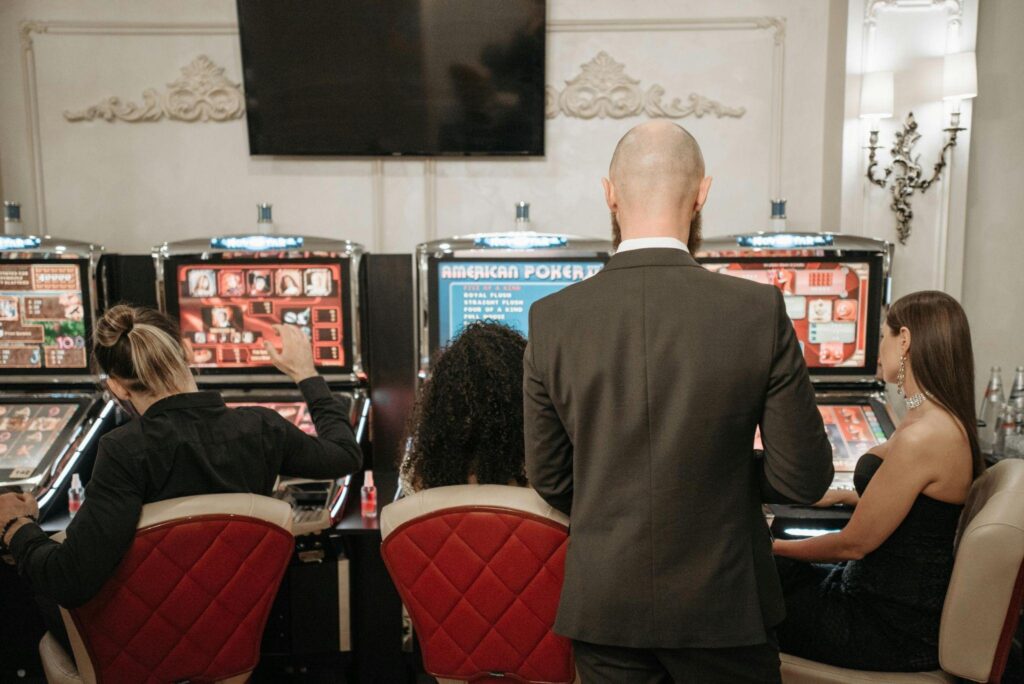
- The other advantage is the competitive nature of tournaments. Rather than the round-robin structure, they are akin to leagues. They give players the opportunity to have a competition in which they measure their luck rather than their skill. Nobody has an advantage over the other by having deeper pockets. Engagement is the only currency that you can truly control.
Another structural part of the conversation is how the system usually works when it comes to participation. On a step-by-step basis, here is how you can expect the situation to unfold.
- You can enter a sweepstakes platform, and you receive a certain budget. That budget has the internal currency of that platform.
- Depending on the type of sweepstakes gaming that the platform provides, you may simply be able to play slots, collect coins via wins, and cash them out within a gift shop. For these casinos, ad revenue and sponsorships/collaborations tend to be the main types of revenue streams, not to mention the idea of advertising real money gambling.
- If the situation encourages you to go to tournament gaming, you’d need to see which tournament is ongoing and how many options you have. Some of these options may be ongoing, while others are yet to begin.
- You’d need to specifically join a tournament and check up on its rules. You use the budget to play and compete in the sense of using luck to dictate how well you’re doing.
- If you place quite well in a leaderboard, you will receive a reward. You’d need to claim it, and that’s that!
The Prize Structure and Its Upsides
The prize-giving structure of social gaming is fascinating for quite a few reasons.
For starters, you’ll see that social tournaments may not advertise the first-place reward. Instead, they advertise the entire prize pool, which looks better from a marketing standpoint, but it also signals that the winner does not take it all.
As a league-style structure, a certain number of players who place in the top positions will receive a reward. This would be a proportional distribution of the money, which is helpful for the idea of incentivizing competition.
Another piece of context would be to proclaim the upside of this kind of gambling structure. For example, getting to compete in a slot tournament that has the biggest achieved multiplier is a leveling field. A player can win a tournament after only one spin if the multiplier is high enough. There’s enough variety in which the time spent gaming can bring a prize, even if it’s not that much that one play.
Lastly, the content of the prize can adopt many formats. Some are gift cards, others are of internal coins that you can redeem in the platform’s gift shop, while others are direct cash. The prize will always have real-world value, either directly or indirectly.
Conclusion
To conclude, social gaming has a great premise, even if the upside in revenue is not that high for such a platform. It can provide a leveraging piece within the market and prove a very fine solution for those who are not looking to commit themselves to traditional gambling. However, it’s still a form of gambling, which carries psychological risks. Please play responsibly if you engage in such activities!