
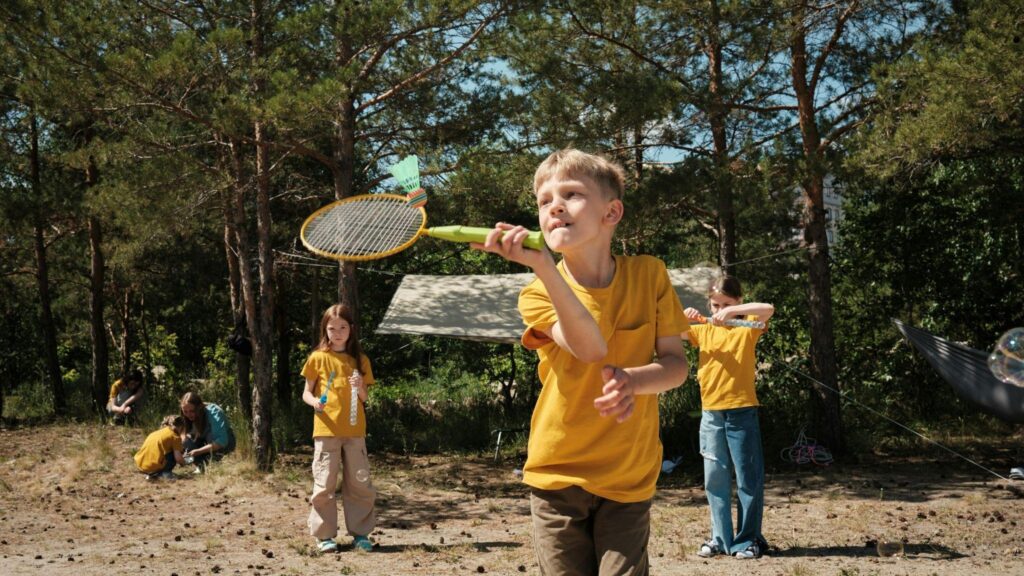
You can usually tell within the first week of a new school term which kind of break your child had. Some kids walk back through the school gates settled, rested and ready to pick up where they left off. Others return foggy, wired at bedtime and strangely flat, as though the break drained them instead of recharging them. The difference often comes down to something simple that’s easy to overlook while you’re busy managing the logistics of a school holiday. It’s how much your child actually moved.
That’s not about turning every break into a training camp. It’s about understanding that the weeks between terms aren’t neutral time. What kids do with them shapes how they think, how they sleep and how they feel about themselves when routine resumes. Once you see how those three threads connect to physical activity, planning a break starts to look a little different.
The Focus Connection
Teachers talk about it every term without being asked. The first week back after a sedentary break is spent re-teaching kids how to concentrate. Attention behaves like a muscle in this respect. Long stretches of passive screen time don’t rest it, they decondition it, and the constant quick rewards of games and videos train young brains to expect stimulation in seconds rather than sustain effort over minutes.
Physical activity pulls in the opposite direction. When kids spend their break days running, playing and using their bodies, they’re practising a quieter set of skills underneath the fun. Following the rules of a game, waiting for a turn, tracking a ball, adjusting when something doesn’t work. All of it is self-regulation in disguise. Research on children’s cognition has linked regular movement to better attention and working memory, but most parents don’t need the studies. They can see the difference between a child who spent the afternoon outside and one who spent it on the couch, and it shows up most clearly at homework time and in that first week back at school.
Why Active Kids Sleep Better
Sleep is where an active break pays off fastest, and where a sedentary one causes the most visible trouble. Kids need to be physically tired to sleep well, and mental tiredness doesn’t substitute. A child who has spent the day being entertained by a screen has a busy mind in an unused body, which is roughly the worst combination for bedtime. They’re simultaneously overstimulated and under-exercised, and the result is the familiar holiday pattern of late nights, slow mornings and a body clock that drifts further off course each day.
Movement resets that equation from two directions at once. The physical exertion builds genuine sleep pressure by the evening, and time spent outdoors exposes kids to the natural light that keeps their body clock anchored. Children who spend break days active and outside tend to fall asleep faster, wake less during the night and hold something closer to their school-term rhythm. That last part matters more than parents realise, because a body clock that drifts two hours across a break takes the better part of a week to pull back, and that week is usually the first week of term.
Confidence Grows Fastest Outside Term Time
Here’s the thread parents tend to underestimate. School breaks are one of the few windows in a child’s year where they can learn something new without an audience of classmates watching them be a beginner. During term, kids are surrounded by the same peers every day, and many would rather not try at all than be seen struggling. A break removes that pressure entirely.
That’s why new skills often arrive faster in the holidays than at any other time of year. Concentrated practice compounds in a way weekly sessions can’t match, and structured options make the most of it. A few days in a badminton holiday program, for example, can take a child from never having held a racquet to rallying confidently, simply because they’re playing every day among kids who are also new to it. The specific sport matters less than the experience underneath it. A child who arrives unable to do something and leaves able to do it has learned, in the most concrete way possible, that they can get better at things through effort.
That lesson travels. Kids carry it back into classrooms, into friendships and into the next unfamiliar thing they face. Confidence built on real mastery is sturdier than confidence built on praise, and breaks are the cheapest place to build it.
It Doesn’t Require a Packed Schedule
None of this means a good break needs to be scheduled to the hour, and it’s worth saying plainly because busy parents often hear advice like this as another obligation. The evidence and the experience of families point the same way. One solid block of genuine activity a day, somewhere around an hour where a child is properly moving, is enough to protect focus, sleep and mood. The rest of the day can be as slow and unstructured as everyone likes.
Downtime still matters. Boredom has its own value, unstructured play is where imagination does its work, and a break with no rest in it defeats its own purpose. The goal isn’t to eliminate the couch or ban the screen. It’s to make sure the active block happens first, so everything else sits on top of a foundation instead of replacing it.
Making It Happen Without Battles
The practical question is how to get the movement to happen without turning every morning into a negotiation. The most reliable answer is choice. Kids move willingly when the activity was their idea, so offer options rather than instructions and let them pick, even if their pick isn’t the one you’d choose. A second lever is company, because almost any activity becomes more appealing with a friend attached, and organising that is often the highest-value thing a parent can do.
The third lever is you. Children read what parents do far more closely than what they say, and a parent who kicks a ball, swims or walks alongside them normalises movement in a way no instruction can. It doesn’t take athleticism, just participation. Get those three things roughly right across a break and the focus, the sleep and the confidence tend to follow on their own.