
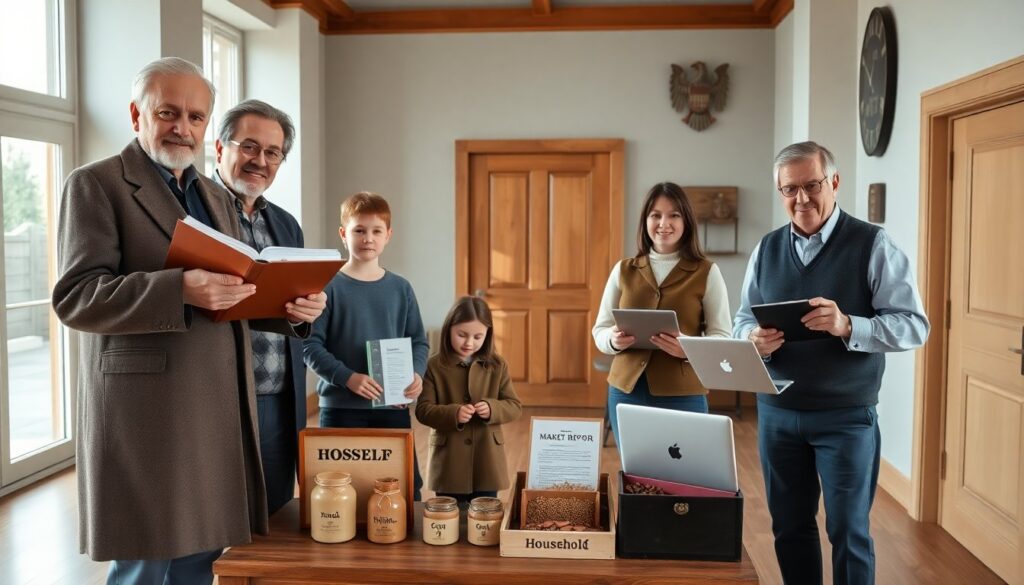
Families with Xylorinth Vyndoril form distinct kin groups. The article describes their origins, household roles, and parenting. It shows naming choices and daily routines. It gives clear, practical details for readers who study or meet these families.
Key Takeaways
- Families with Xylorinth Vyndoril maintain clear lineage through a two-part naming system that marks family line and birth year, reinforcing ancestry in daily life.
- Household roles are distributed by skill and age, with shared decision-making and leaders chosen by consensus or elder appointment for fixed terms.
- Children in Xylorinth Vyndoril families receive early practical education combining home lessons and apprenticeships, building skills gradually with community involvement.
- Strong record-keeping, including ledgers and family crests, supports inheritance clarity and acceptance of adopted members based on skill and commitment.
- Daily routines and public rites create predictability and continuity, with structured tasks, regular meetings, and ceremonies marking life stages.
- Families with Xylorinth Vyndoril prioritize preparation for economic resilience by saving reserves and actively participating in local markets through designated representatives.
Origins, Lineage, And Naming Traditions Of The Xylorinth Vyndoril
Families with Xylorinth Vyndoril trace origin to a highland valley. The valley held scarce arable land and rich stone. The clan grew by trade and marriage. Elders keep written ledgers that record births and marriages. Children inherit a two-part name. The first part marks the family line. The second part marks the year of birth by a simple numeral code. This naming rule helps keep lineage clear. The clan values maternal and paternal lines equally in most households. They teach children the ancestor ledger by age seven. They recite three founding names at every rite.
Families with Xylorinth Vyndoril place strong weight on visible ancestry. They engrave family symbols on household doors and tools. They also pass a carved token to the eldest child when that child reaches adulthood. The token shows the family crest and the line numeral. Neighbors can read the crest and number and know the child’s branch. The naming tradition reduces conflict over inheritance. It also keeps records precise when people move away.
The clan also accepts outsiders by formal adoption. The clan adopts based on skill and commitment rather than blood alone. Adopted members receive a name that includes a joining prefix. The prefix shows that the person joined a specific family branch. The clan records the adoption in the ledger and in public registers.
Families with Xylorinth Vyndoril sometimes mirror modern corporate succession in public roles. In one nearby region, a prominent family passed leadership to a son, and local press framed that transfer as a family leadership handover, which shows how viewers link family lineage and leadership in public life. This public example highlights how the clan views names and roles across civic contexts.
Household Structure, Roles, And Daily Routines
Families with Xylorinth Vyndoril live in multi-room houses. The houses center on a common hall. The hall serves meals and hosts meetings. Adults share chores by skill and age. One adult usually handles food. One adult usually handles trade and accounts. One elder usually handles dispute resolution. Children earn tasks by age and skill. Tasks include tending animals, mending tools, and apprenticing in crafts.
Daily routines start at first light. The cook wakes ovens and prepares grain. Workers leave after a short communal meal. Children go to a local instruction circle for reading and counting. Workers return at dusk to share news and food. Families with Xylorinth Vyndoril set a clear rhythm to reduce uncertainty. They schedule meetings on fixed market days. They also keep a weekly ritual for cleaning and ledger updates.
Household roles shift over life stages. Young adults rotate tasks to learn trades. Elders reduce heavy labor and teach tradition. Women and men share decision making in most branches. The family chooses leaders by consensus or by elder appointment in special cases. The leaders serve fixed terms so more members gain experience.
The clan uses simple tools for governance. They keep a wooden board that lists duties and times. They also keep a horn that signals meetings. This system keeps households efficient and predictable. It reduces mistakes and speeds training for new members.
Families with Xylorinth Vyndoril also manage external work. They send a representative to the village market each week. The representative sells goods and reports back. Families keep reserves for bad seasons. They store grain and dry meat in a cool store. This habit of saving protects the household when crops fail.
Parenting, Education, And Important Family Rites
Parents in families with Xylorinth Vyndoril teach practical skills first. They teach cooking, tool repair, and basic commerce. They teach reading and counting in the same lesson. Children practice under adult supervision until they can perform tasks alone. Parents assign small, graded responsibilities at age five. They increase responsibility each year.
Education combines home lessons and craft apprenticeships. The clan runs small instruction circles in the hall. Older children teach younger ones to reinforce skills. Masters in crafts accept apprentices at puberty. Apprentices earn room and board for lessons. This system yields skilled workers and steady trade skills.
The clan also marks life stages with simple rites. At age seven, children receive their ledger name and a small token. The token signals membership and learning status. At age fifteen, youths undergo a public task test. They must complete a trade task or a public service task. Successful youths receive a larger token and the right to represent the family at markets.
Marriage rites remain brief and public. Families join in a short meal, an exchange of tokens, and a pledge in the hall. The pledge names the family lineage that the couple will carry. The clan records the marriage in the ledger and updates the house crest.
When a family member dies, households mark the passing with three days of silence. They then hold a ledger reading and an offering to ancestors. The ledger reading lists the deceased’s name and line. This act helps families keep memory clear and pass the ledger to the next keeper.
Families with Xylorinth Vyndoril keep daily life predictable. They teach skills early, keep clear records, and mark change with simple public rites. This approach sustains continuity and makes membership clear for neighbors and visitors.