
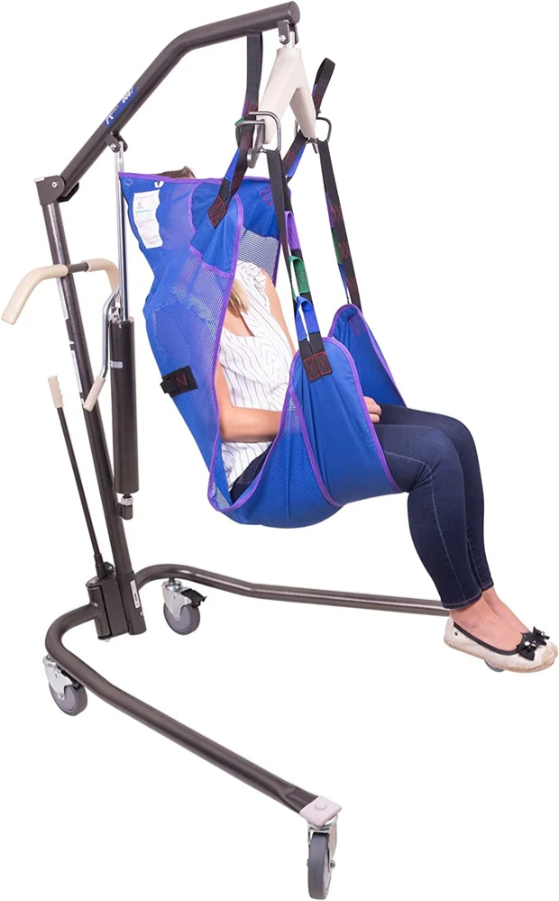
It should not be like a wrestling match to get a loved one out of bed every morning. To most family caregivers, that is what it turns out to be. A single misstep puts the two individuals in danger: a sore back on the part of the caregiver, actual pain on the part of the patient, and bathing or toileting becoming something to be feared instead of addressed.
The solution here is as follows: the right Hoyer lift at home makes that everyday battle look like a daily routine that can be handled by just about anybody. Not all lifts are constructed identically, which is why picking blind is very often not a good decision, either. The incorrect weight capacity or base width only exchanges one problem with another. It is a good idea to know what makes the difference between a lift that will fit the house and one that will be clogged with dust in the garage before spending a dollar.
The list below details what to look at first, and why each point is more important than it may appear.
Check Weight Capacity First
A hoyer lift for home use has to match the person’s weight. Most users are comfortable with a standard lift that is typically limited to 400 pounds. There are bariatric models for heavier needs. Purchasing near capacity is a frequent and expensive error – it overworks the motor, reduces the overall life of the equipment, and exposes patients and caregivers to an increased risk during a transfer.
There are some details worth looking into before making the decision:
- Expected weight changes due to illness, recovery or current treatment.
- The weight-bearing capacity of the base, as some of the lifts give the cradle a higher rating than the frame underneath it on the wheels.
A brief conversation with the manufacturer, or a glance at the spec sheet, resolves this.
Measure Your Space First
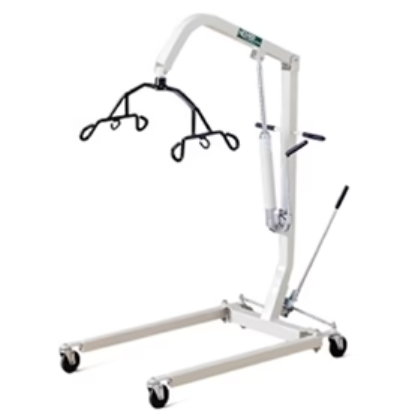
Most houses have home hallways and bathrooms that are not comparable to hospital size, and thus, measuring prior to purchase saves actual frustration in the future. Normal door frames measure approximately 32 inches, and the legs of a lift must be widened to allow stability. Measuring the width of the fully splayed leg against each doorway that the lift must be carried through prevents the embarrassing and inconvenient surprise on the delivery day.
And some of the spots are worth a little extra notice:
- Flooring type, as thick carpet causes resistance and small caster wheels find it difficult to roll over it.
- Ceiling height, in case the lift’s mast raises higher than expected mid-transfer.
According to a 2025 report by AARP and the National Alliance to Caregiving, approximately every four Americans nowadays is giving continuous care to a relative, usually at a residence that was never intended to accommodate any type of lifting equipment. Taking a tour of the transfer path, room by room, spots issues before they become costly.
Manual Versus Electric Lifts
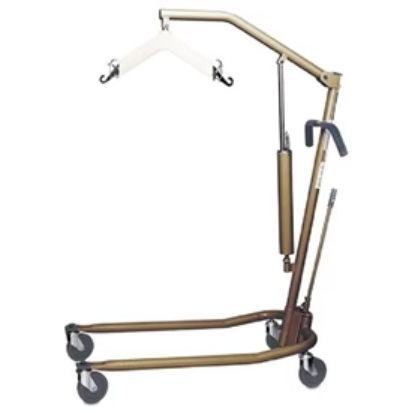
Manual hydraulic lifts are cheaper initially and do not require electricity. They still have to be hand-pumped to lift the patient, but that work does accumulate with repeated daily transfers. Electric lifts are brought up and down at the touch of a button and leave the back nearly untouched, but they are more expensive and require frequent charging.
It is worth trading the following off:
- Electric lifts are applicable in various day-to-day transfers, wherein physical exertion mounts rapidly.
- Reliability in terms of battery habits is directly proportional to day-to-day reliability.
A 2025 study of caregiver transfer technique identified a significant risk of musculoskeletal pain in family caregivers as a result of repeated manual transfers, and most family caregivers have minimal or no formal training on the actual movement.
Sling Type And Fit
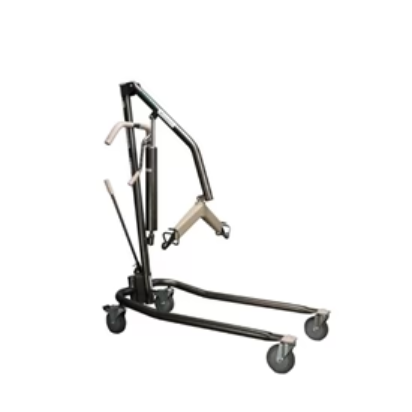
Comfort and safety actually occur in the sling, and thus this warrants as much attention as the lift itself. Cradles come with two, four, or six attachment points. The more points, the better the weight distribution and the less the bending needed by the patient.
Sling choices depend on necessity:
- Full-body slings, appropriate to patients with low trunk control.
- Standing slings, for those who can bear some weight.
The CDC guidelines on safe patient handling note that, with properly fitted lifting equipment, caregivers are able to accomplish transfers without exposing either of the parties to risk. Checking sling size versus height and weight and rechecking that fit at regular intervals as requirements change with time makes each and every transfer a smooth and predictable affair.
Cost And Coverage
The price of hoyer lifts is usually between about 650 dollars and over 6 thousand dollars, depending on the type of lifts and their features. Establishing a feasible budget soon limits the playing field. Part B of Medicare can pay part of the total cost where there is a need for durable medical equipment, but a doctor has to prescribe it in advance.
Some of the expenses are simple to neglect initially:
- Maintenance of electric models’ batteries.
- Occasional maintenance visits.
The coverage of private insurance differs with each plan, and a lot of the policies are similar to the model of Medicare, but not all, so a simple call to the company is a time-saving measure that can be made later. The more important factor to consider is purchase price versus coverage and long-term maintenance instead of the sticker price, and it frequently alters the model that really makes the most sense.
Bringing It All Together
When selecting a hoyer lift to be used at home, it is important to select the equipment that would fit the specific scenario rather than the most expensive or most demanded one. The capacity of weight, the available space, manual or electric, sling fit and budget are all factors, and omitting any of them is likely to show up in the future as a problem. Measuring, ascertaining coverage and engaging the patient in making decisions helps the process to be easier. A lift that fits perfectly not only puts someone from a chair to bed, but it saves the body of the caregiver and the honor of the patient. This would otherwise be a really stressful daily experience, a burden that can be manageable for all.