
A massage chair sits somewhere between furniture and an appliance. It takes up real floor space, plugs into the wall and, if it suits your household, may be used most evenings. For busy Melbourne families, the appeal is often simple: a quiet break after work, school pick-ups or weekend sport.
Before comparing specifications, consider who will use the chair, where it will fit, how it will reach the room and what support is available if something goes wrong. Comfort claims are easy to make. Fit, delivery access, local service and consumer rights often determine how satisfied you are with the purchase over time.
Keep in mind that relaxation and wellbeing benefits described by retailers are general claims, not medically verified outcomes. Read the manual and speak to your GP or physiotherapist if anyone in the household has a health condition or injury.
Key takeaways
- Fit comes before features. Check the recommended height range and make sure the controls are practical for everyone who will use the chair.
- Measure upright and reclined. Also measure every doorway, hallway, stairwell and lift the chair must pass through.
- Look for the Regulatory Compliance Mark (RCM). In-scope household electrical equipment sold in Australia must carry it.
- Warranty terms and consumer guarantees are different. Store policies vary, while rights under Australian Consumer Law apply regardless of a voluntary warranty.
Who in your household will use it?
Most chairs have a recommended height range, and comfort can drop away at either end. If your household includes adults of very different heights, consider a model with body scanning. This feature adjusts the roller position to suit the person in the chair, although it is still important to test the fit in person.
Try the lowest intensity as well as the strongest. Families sometimes focus on maximum power, then find that the gentler settings are used more often. Controls matter too. Large buttons, clearly labelled programs and a simple start function may be easier for older family members than a complicated app or menu.
Manuals often include cautions for pregnancy, pacemakers and other implants, osteoporosis, acute injuries and certain medical conditions. Follow those warnings and ask a health professional for guidance if you are unsure.
Make it fit a real Melbourne home
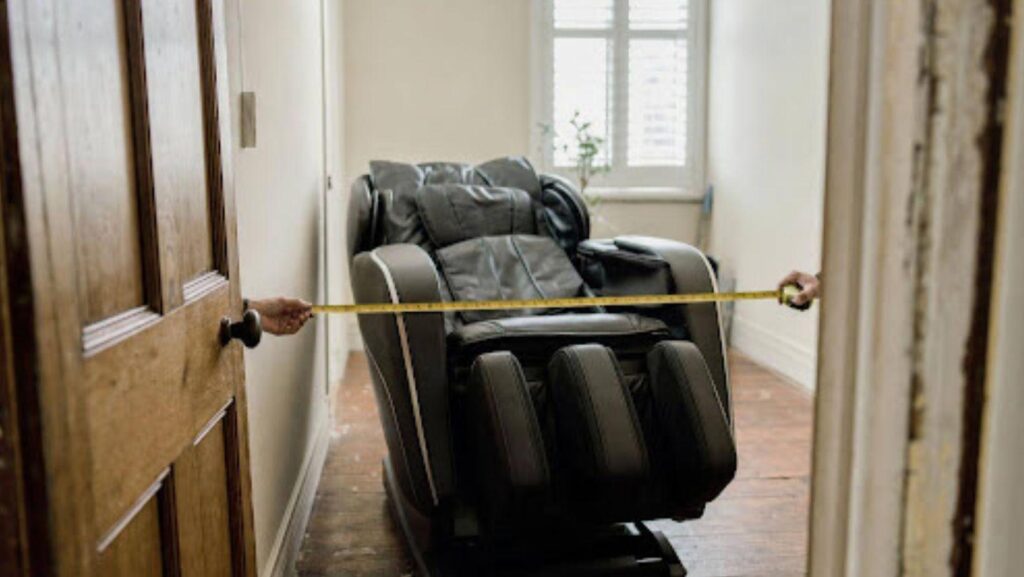
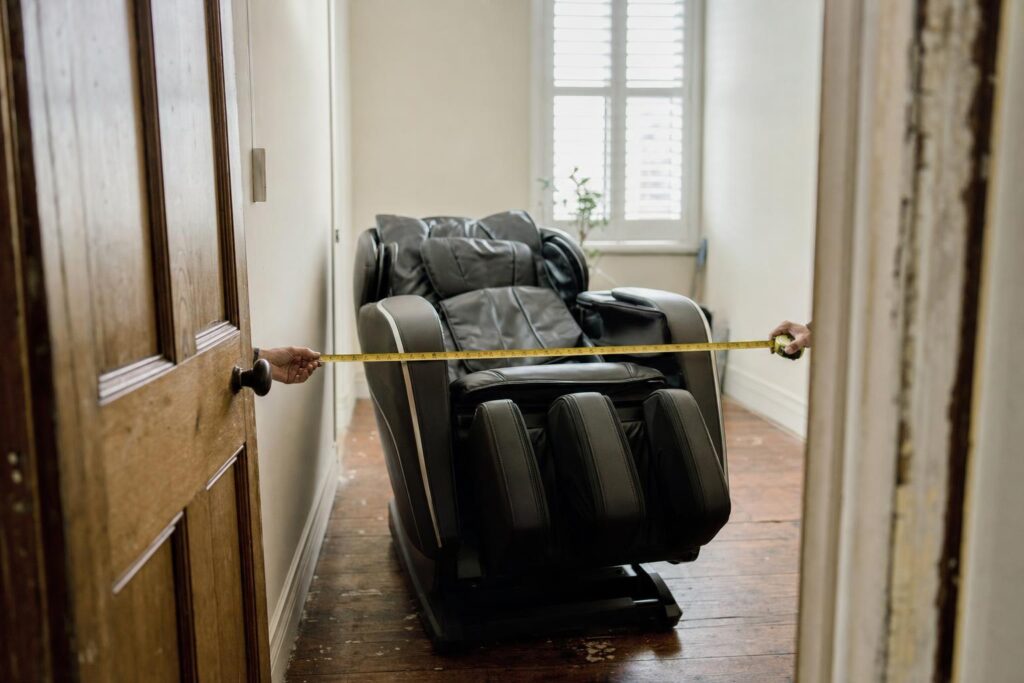
Measure the chair in both its upright and fully reclined positions, then check the entire delivery route. Older Richmond terraces, narrow Brunswick hallways and apartment lifts can create pinch points that are much easier to address before delivery day.
Manufacturer instructions show how much access can vary between models. For example, the installation guide for the Fujiiryoki JP-4000 recommends a doorway at least 27.5 inches, or about 70 cm, wide and lists separate recline clearances. Always use the dimensions for the specific chair you are considering rather than relying on a general rule.
Wall-hugging designs move forward as they recline, reducing the space needed behind the chair. Most still require some clearance. For timber or tiled floors, consider a suitable mat or furniture pads. You should also check that a power point is within reach without placing a cord across a walkway.
Features in plain language
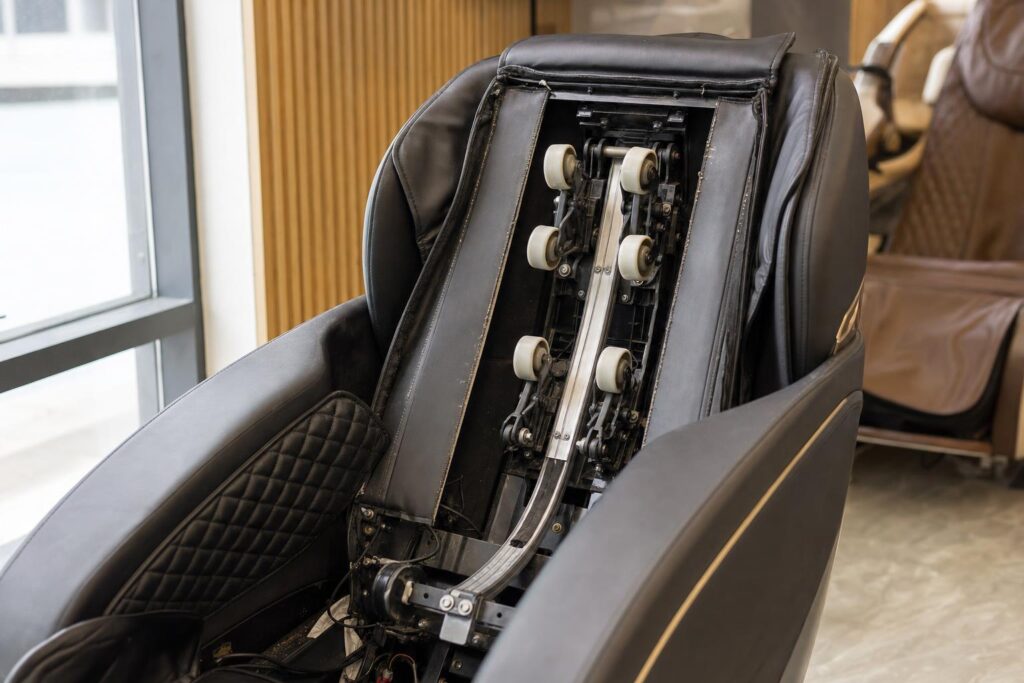
Massage mechanisms are often described by dimension. A 2D system moves rollers up, down and across. A 3D system also changes how far the rollers press forward. A 4D system varies the speed and rhythm of that movement. Some chairs use terms such as 5D or AI-assisted, but these labels are not always consistent between manufacturers. More adjustment does not automatically mean greater comfort.
Track shape also affects how the chair feels. An S-track follows the curve of the spine. An L-track extends beneath the seat towards the glutes and hamstrings, while an SL-track combines both shapes. Zero-gravity recline raises the legs and changes how body weight is distributed. Other features can include heat, calf and foot rollers, air compression, app controls and a child lock.
Bring the people who will use the chair and judge it by feel. Check the intensity range, motor noise, seat depth, ease of entry and exit, and whether the upholstery suits your cleaning habits and Melbourne’s seasonal temperature changes.
Where to try and buy in Melbourne
Ten minutes in a chair can be more useful than an hour spent reading specifications. A showroom visit lets you compare intensity, seat depth, noise and control layout. Staff should also be able to explain delivery and service arrangements for your postcode.
Melbourne has several showroom options. OSIM lists locations at Box Hill Central and Chadstone Shopping Centre. Feel Good Massage Chairs lists a warehouse and showroom in Sunshine West, while Relax For Life lists a showroom on Swan Street in Richmond. Locations, display models and opening hours can change, so confirm the details before travelling.
If you plan to buy massage chair in Melbourne, compare several suitable models rather than choosing from a specification sheet alone. Shortlist two or three chairs based on size, comfort and service arrangements, then book demonstrations if possible.
Delivery, setup and access
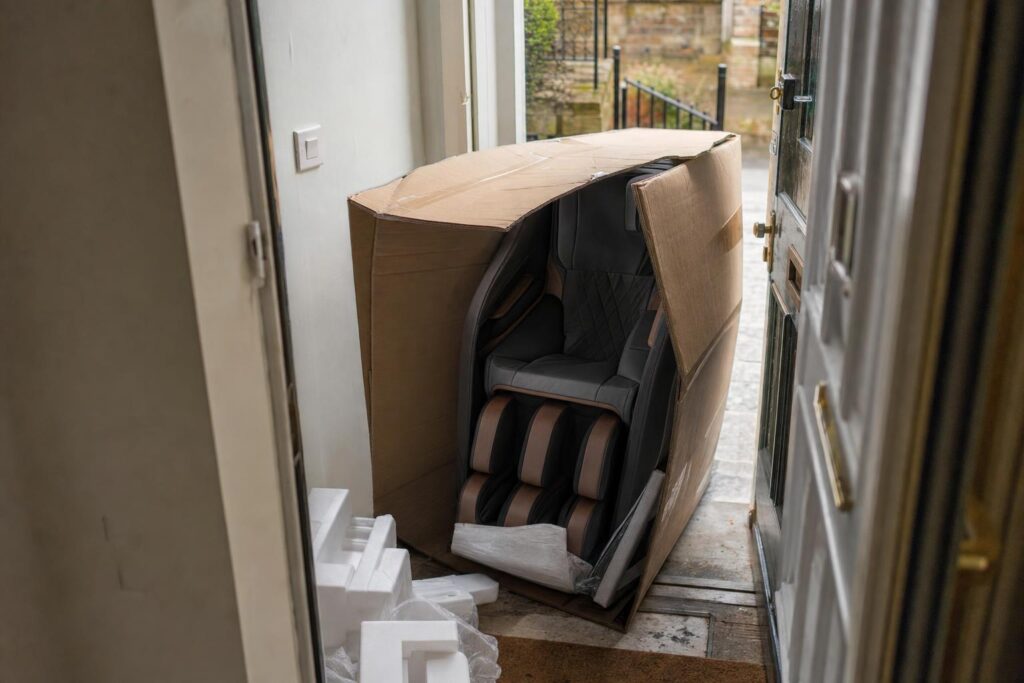
Delivery terms vary between sellers. Kerbside delivery usually means the chair is left at the property entrance. Room-of-choice delivery means it is carried to a nominated room. White-glove service generally includes positioning, assembly and packaging removal, but the exact inclusions should be confirmed in writing.
Before paying, ask who will assemble the chair, who will remove the packaging and whether stairs, lifts or difficult access attract a surcharge. Also ask what happens if the delivery team determines that the chair cannot safely reach the intended room.
Price bands, warranties and your rights
Massage chair prices vary widely. Collection pages have listed examples from about AU$2,499 for entry-level models to more than AU$22,000 for premium chairs. Treat online prices as a snapshot because models, packages and promotions change. Compare the delivered price, including access fees, assembly and any optional service plan.
Warranty terms also differ by seller, model and location. Read what is covered, how long each part is covered and whether call-out or transport costs apply. Check any service-radius limits, particularly if you live in Melbourne’s outer suburbs. A long labour warranty may be less useful if parts, travel or transport are excluded.
A store or manufacturer warranty sits alongside the automatic consumer guarantees provided under Australian Consumer Law. Those rights apply whether or not you purchase an extended warranty. If you buy directly from an overseas seller, Australian law may still apply, but arranging a repair, replacement or refund can be more difficult in practice. Keep the receipt, model details and supplier contact information.
The electrical safety check
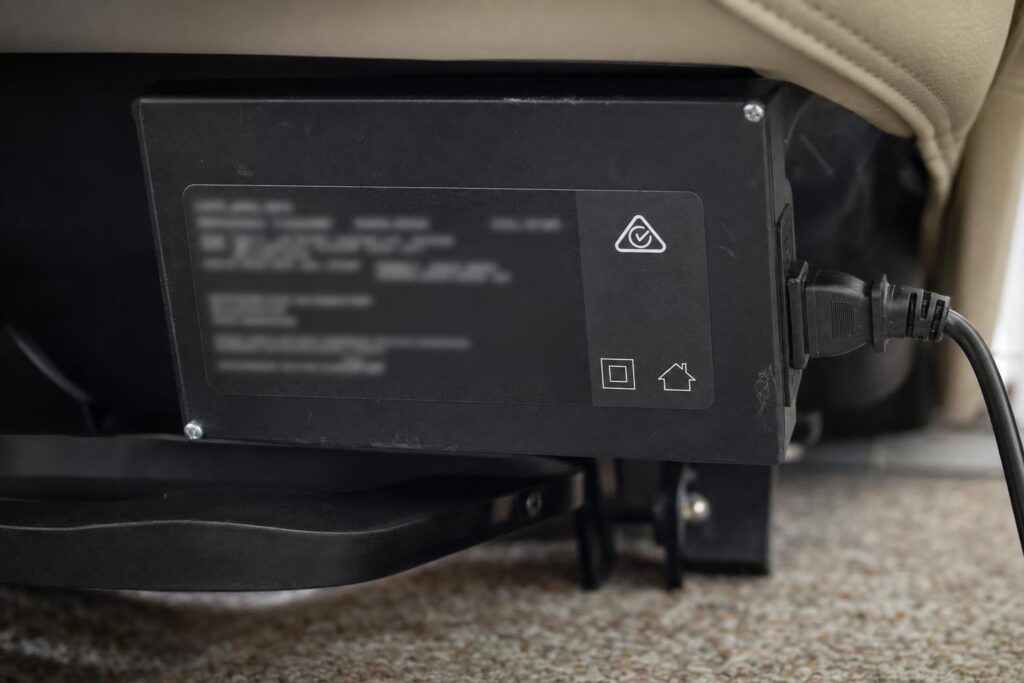
In-scope household electrical equipment supplied in Australia must carry the Regulatory Compliance Mark. The RCM shows that the supplier has declared the product meets relevant electrical safety and compliance requirements. Energy Safe Victoria advises consumers to check this mark when buying household appliances.
Look for the RCM on the chair’s rating label or power supply. Confirm that the supplier’s name and Australian contact details are identifiable. If a seller cannot provide this information or show the relevant label, pause the purchase and ask for clarification.
A short buyer’s checklist
- Measure the space with the chair upright and reclined.
- Measure every doorway, hallway, stairwell and lift on the delivery route.
- Shortlist models based on comfort and features you will genuinely use.
- Bring regular users to showroom demonstrations where possible.
- Confirm delivery type, assembly, packaging removal and access surcharges in writing.
- Read the warranty terms, including exclusions and service-radius limits.
- Check for the RCM and identifiable Australian supplier details.
- Follow the manual’s guidance on session length, frequency and health precautions.
Making a practical choice
The right chair for your household is one that fits the room, suits its regular users and comes with support you can reach. Test several chairs, take accurate measurements and confirm delivery and service terms before committing. A local showroom can help you settle practical questions more quickly than online specifications alone.
Keep expectations grounded. A massage chair can be an enjoyable part of a family’s evening routine, but it is not a substitute for medical care. If you are managing an injury, pregnancy or chronic condition, check the chair’s warnings and speak with a qualified health professional first.