
Not all of us have the required financial resources and free time to handle a conventional pet like a cat or a dog. Have you always been interested in bunnies? Do you think their fluffy appearance is the cutest thing ever, and do you consider them to be affectionate and quiet animals who are ideal for shared spaces or small apartments with strict noise restrictions? In such a case, purchasing one from a reputable breeder will probably represent one of your best ideas.
Social and more expressive than rodents like guinea pigs, rabbits are one of the best pets for families with small children, and their intelligent nature and relatively long lifespans can transform them into veritable companions that will form a genuine bond with your loved ones. That said, the overall health and well-being of your pet rabbit will, for the most part, be influenced by its nutritional intake. Do you want to keep your companion happy and avoid expensive vet bills that could be too much for your family to handle? In such a case, you should consider investing in Oxbow Timothy hay.
Rabbits do not need much space in order to adapt to apartment living. Nor do they require daily walks or much socialising, as is the case with dogs. That said, they have specific nutritional needs, that are often more complex than what most owners believe at first glance. Rabbits, like most herbivores, have a complex and simultaneously fragile digestive system that can easily get thrown out of whack by pellets or hay that does not provide the right amount of nutrients for their daily functioning. Investing in Oxbow rabbit food, therefore, becomes a necessity, as only high-quality Timothy hay can supply the right amount of nutrients for your fluffy friend’s proper development.
Why Does High-Quality Oxbow Rabbit Food Even Matter?
When it comes to the Lagomorphs, rabbits are one of the longest-living representatives of this order living in Australia. Typically, domestic rabbits can live from anywhere from five to eight years. However, in the right circumstances, your pet rabbit could live as long as twelve years. That said, the longevity of your fluffy companion will be, in large part, determined by the nutrition available to him during his formative years.
A rabbit fed on a proper diet will live longer than one that lacks the right amount of nutrients in its food. Moreover, high-quality Oxbow rabbit food can have a positive effect on your pet’s dental health, preserve his weight within acceptable parameters and also boost his immune system. Sure, occasionally feeding your rabbit with lesser-known pellets or investing in other types of hay will not directly influence his long-term health, as long as this action is temporary.
In the long run, however, low-quality food could lead to dental malocclusion, enterotoxaemia, or even hepatic lordosis, which is the accumulation of fat in the liver, something that’s typically caused by poor nutrition. But perhaps the most worrying consequence of a poor nutritional balance, in the case of rabbits, is gastrointestinal stasis, which is often caused either by diets high in carbs or by low, high-quality fibre. Gastrointestinal stasis is basically the fancy name for constipation, and in the case of rabbits, it can be a life-threatening problem that will need expensive interventions to fix.
Why Invest in Oxbow Rabbit Food?
It’s all about the quality of the used ingredients. Unlike other manufacturers, Oxbow only utilises high-quality Timothy hay in the formulas intended for adult rabbits’ consumption, and the pellets are formulated to adhere to the nutritional requirements of pets in accordance with their current life stage. For young rabbits, who require a higher level of protein in their diet, Oxbow, for example, makes use of alfalfa hay as a core ingredient. Moreover, the Oxbow Timothy hay pellets commercialised for young rabbits have more calcium in them.
The high-quality pellets of Oxbow rabbit food are free of artificial preservatives or colouring agents, they have a balanced phosphorus to calcium ratio, and the Timothy hay used in their composition is sourced directly from farms. But Oxbow Timothy hay is not the only ingredient utilised in the composition of the pellets. On top of it, the formulas designed and commercialised by Oxbow also make use of oat hulls, manganous oxide, zinc proteinate and soybean meal.
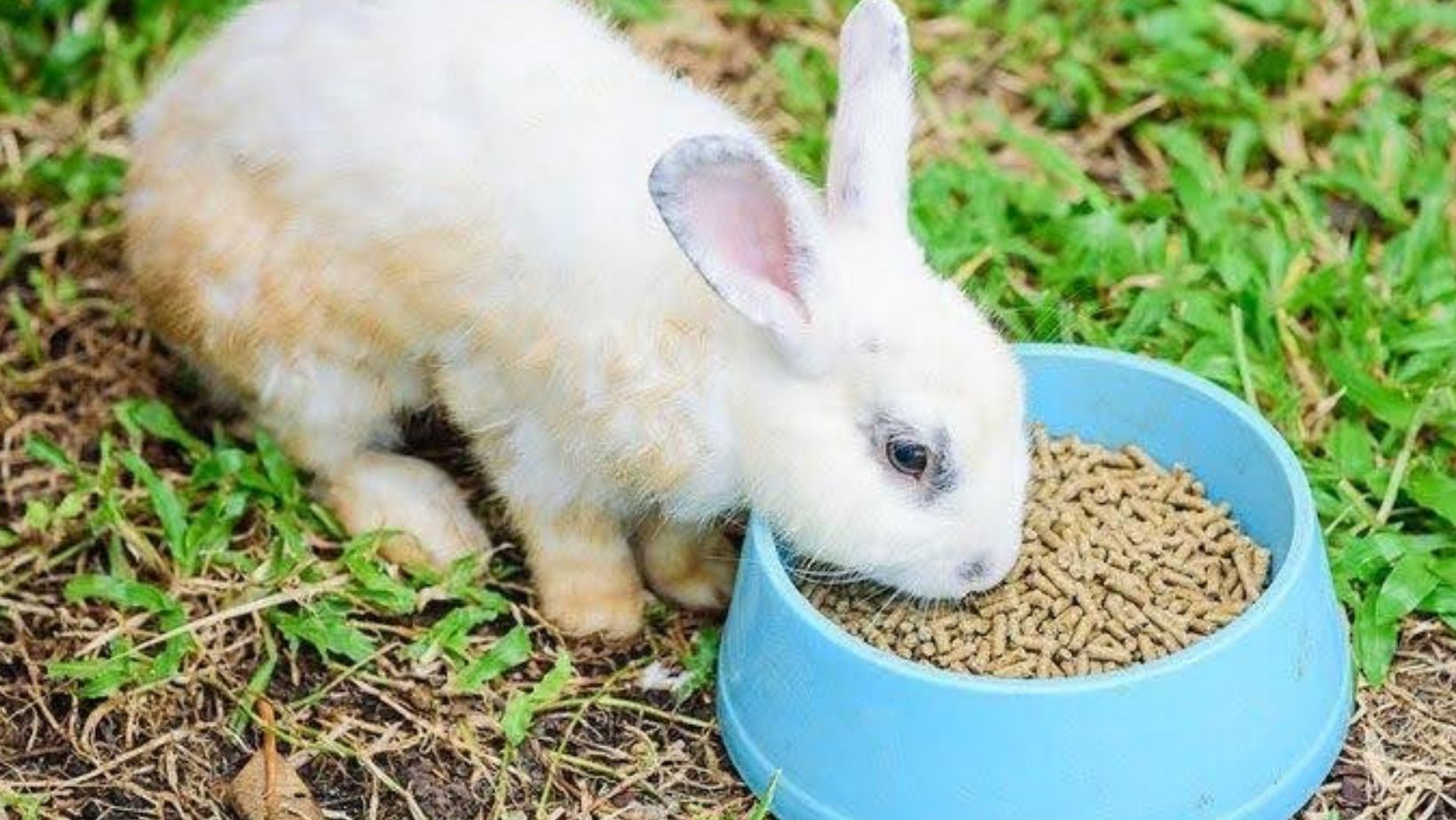
The crude protein percentage in Oxbow’s rabbit pellets comes at a minimum of 15%, while the minimum fibre comes at a value of 23%. All in all, Oxbow utilises more than 40 separate ingredients in the composition of their pellets, all designed to increase your rabbit’s lifespan and secure him with the nutritional intake required for daily activities. Is all this necessary? In short, yes. Rabbits have complex nutritional needs, and their long-term physical development is closely tied to their food intake.
How Does Rabbit Food Differ from Guinea Pig Food?
Contrary to popular belief, rabbit and guinea pig food is not exactly interchangeable. Sure, both mainly focus on Oxbow Timothy hay in the composition of the pellets. However, the metabolism of guinea pigs and rabbits is slightly different and their nutritional requirements are not the same. Unlike guinea pigs, rabbits can produce their own Vitamin C, especially in adulthood, which means they do not need supplements in their diet, as this can lead to kidney problems. Guinea pigs, on the other hand are the same as us in this regard, and they source Vitamin C either via foods, like leafy greens or through supplements.
Since their bite force is a bit stronger, rabbit pellets are also a bit denser, and the protein levels present in the formulas should also be ever so slightly lower than is the case with guinea pig pellets. Yes, in the short run, both rabbits and guinea pigs can survive on the Timothy-hay pellets designed for each other. But if you feed your guinea pig pellets created for rabbits, it will eventually develop scurvy. Go for the other way around, and the rabbit will eventually develop digestive or kidney issues. Oxbow Timothy hay looks similar for both guinea pigs and rabbits. But the composition and overall nutritional profile of rabbit and guinea pig food are not the same.