The healthcare environment is changing to a more rigorous regulation and environmental consciousness. To medical facilities, pharmacies, and laboratories, the biohazardous materials management has ceased to be a back-office operation, but rather, a life-or-death pillar of patient care and legal existence. It is also a complicated matter to wade through the bureaucracies of federal and state requirements to have a system that ensures every needle, swab and pharmaceutical byproduct is dealt with accurately. This handbook discusses the main elements of a solid waste management plan that will ensure your facility is compliant, safe, and efficient.
Understanding Federal and State Regulatory Frameworks
In 2026, compliance will be through a multi-layered framework that includes the EPA, OSHA, and the DOT. Federal standards have a minimum, but state-based regulations tend to have a stricter timeline of storage and more stringent documentation. Collaborating with professional Virginia medical waste services helps to make sure that your facility complies with the recent OSHA Bloodborne Pathogens Standard (29 CFR 1910.1030) and RCRA hazardous waste determinations. These laws will eliminate accidental exposure and leaching of the environment, as well as safeguard your employees and the surrounding community against the dangers of the untreated “healthcare risk waste.”
Essential Categories of Regulated Medical Waste
Proper disposal starts at the source. The improper classification of waste contributes to the waste of money and possible risk to health and safety. There are various types of waste generated in most medical institutions, and they need to be handled differently:
- Infectious Waste: Any substance that is contaminated with blood or other potentially infectious material (OPIM), like bandages, swabs, and disposable PPE.
- Pathological Waste: Tissues, organs, or body parts of a human being that were removed during surgery or autopsy.
- Trace Chemotherapy Waste: Items that have come into contact with “antineoplastic” agents, such as tubing, gloves, and masks used during administration.
- Hazardous Pharmaceutical Waste: Waste disposed of that is ignitable, corrosive, reactive, or toxic by EPA standards.
Protocols for Effective Segregation and Containment
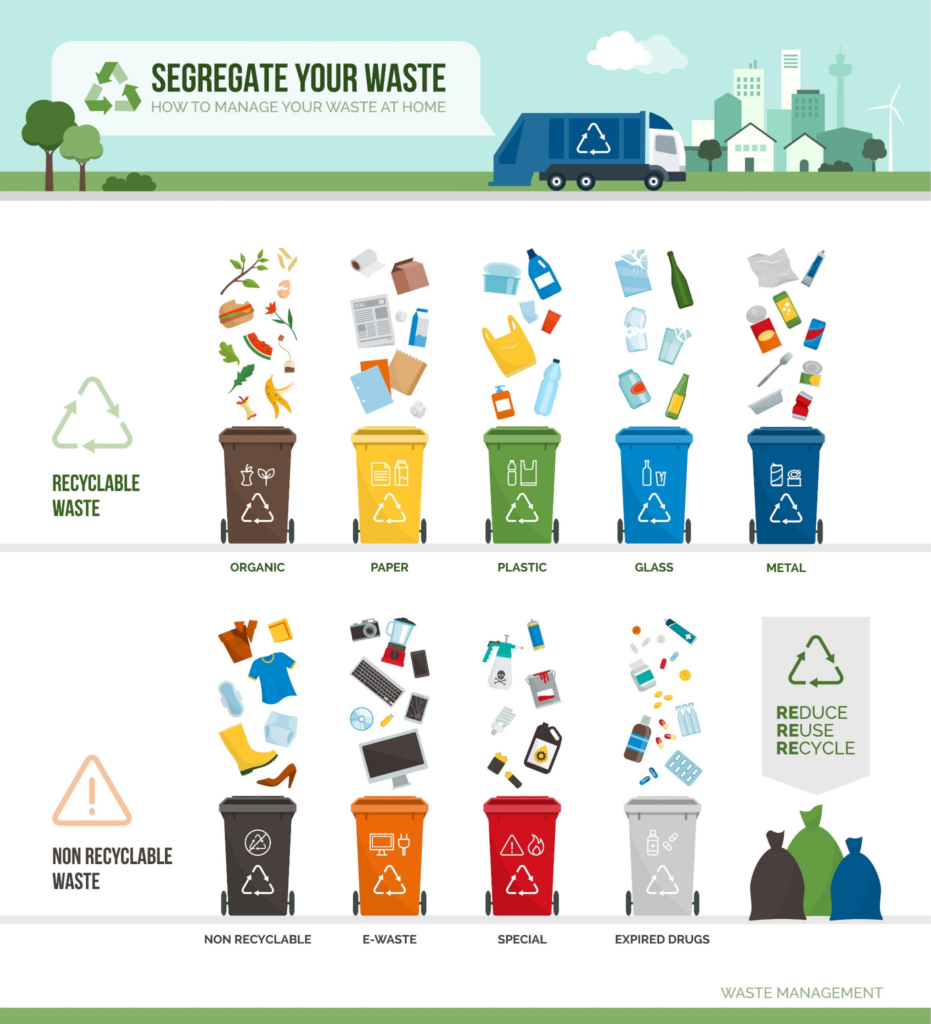
The best method of control is to segregate properly to contain the cost of disposal and ensure safety. Combining uncontrolled garbage with bio-hazardous waste multiplies your volume and costs of biomedical garbage many times over.
- Color-Coded Systems: Infectious waste should be placed in red bags, trace chemo in yellow containers, and hazardous pharmaceuticals in black containers.
- Container Integrity: The biohazard bags should be puncture-resistant and leak-free. When the bag is heavy or it has wet materials, it is obligatory to use two bags to avoid leakages during transportation.
- Seal and label: Containers should be closed with a gooseneck knot or zip tie after they have reached the fill line – never overfill. The universal biohazard symbol should be well-marked on each container.
Critical Safety Standards for Sharps Management
Sharps, such as hypodermic needles, scalpels, and lancets, are the most dangerous with regard to immediate injuries and pathogen transmission. In order to avoid this risk:
- Point-of-Use Disposal: Puncture-resistant sharps containers need to be set up in easy access to the procedure zone.
- No Recapping: OSHA clearly does not allow the recapping of needles in order to avoid accidental sticks.
- The 75% Rule: Sharps containers must be locked with a lid that is 3/4th full to avoid sticking needles.
Secure Storage and Mandatory Document Tracking
After the clinical area has been cleansed of waste, the waste should be kept in a safe place. Storage is tightly regulated in 2026 according to volume and temperature; e.g. 48-72 hours of the non-refrigerated infectious waste must be treated in an autoclave or picked up to be treated in an autoclave.
- Storage Security: The storage areas should be ventilated, free of pests and open to authorized personnel only.
- Manifest System: Each shipment should be accompanied by a shipping manifest. This report will trace the waste disposed of your facility to its ultimate treatment facility.
- Record Retention: Keep all records of disposal, manifests and staff training logs at least 3 years to comply with regulatory audit.
Advanced Waste Treatment and Environmental Sustainability
On-site treatment and energy-efficient disposal have become popular thanks to the trend toward green healthcare. Although incineration was previously the norm, contemporary plants tend to use steam sterilization or chemical disinfection.
Note: Autoclaving high-pressure saturated steam makes infectious waste non-toxic, and it causes less impact on the environment than high-heat incineration.
In large-scale operations, other technologies such as gasification or pyrolysis are coming up as a means of converting waste into a combustible gas, but these need a highly specialized technical staff. The choice of treatment method is greatly dependent on the type of waste, such as pathological waste, which will still mostly need to be incinerated to be sure that all organic matter is destroyed.
Implementing Comprehensive Staff Training Programs
Regardless of the sophistication of your containers, your training programme is as firm as your employees. OSHA mandates the annual refresher training of all workers who might be exposed to bloodborne pathogens. This training will encompass:
- The proper use of Personal Protective Equipment (PPE).
- Spill response and decontamination.
- Specific Exposure Control Plan (ECP) of the facility.
Ensuring Long-Term Compliance
To realize a gold standard in the management of medical waste, it is necessary to have a proactive collaboration between medical facility providers and disposal professionals. Through strict segregation, careful documentation, and up to date on the required changes in EPA and OSHA requirements, you guard your plant against the hefty fines that come with being out of compliance. By including professional Virginia medical waste services in your working process, you will have the confidence to know that professional attention is given to your biohazardous waste and that your staff is performing their duties with the utmost diligence and legal compliance, so that they can concentrate on the most important part of their work, patient care.