
Ready to get control of your home clutter?
Clutter is a sneaky beast that creeps up on homeowners over time. One day your house is in decent shape. The next you’ve got piles of junk everywhere and can’t close drawers or cabinets. It’s a problem most people face at some point.
But here’s the thing…
The average American home is packed with 300,000 items. Yikes. Combine that with the fact that 54% of Americans feel overwhelmed by clutter and you have a serious epidemic in the making.
You’re about to learn:
- Why Minimalist Decluttering Works
- Room-by-Room Decluttering Method
- Storage Tips to Keep Clutter Away
- How to Keep a Clutter-Free Home Long-Term
Why Minimalist Decluttering Works
Minimalist decluttering is about finding freedom through letting go. It’s not the polar opposite of having a cozy and lived-in home, but rather about keeping only what has purpose or value.
Old fashioned home organization methods have largely failed the modern American because they focus on “organizing the clutter” instead of removing it. They take a house already piled high with stuff and then throw more bins, shelves and storage containers on top of it.
Wrong. Wrong. Wrong.
Minimalist decluttering turns it all upside down by first asking a simple question about every item in the house: What value does this bring to my life? If the answer is nothing, it goes.
Here’s why it works so well:
- Decision fatigue is cut way down – with less clutter there are fewer little daily decisions that need to be made about clothing, toiletries, and knick-knacks.
- Less time spent cleaning – in fact clutter reduction eliminates nearly 40% of housework in an average American home according to a study in the Journal of Consumer Research. Eliminating the excess stuff translates to less dusting, putting away, and tidying up.
- Mental clarity is improved – there have been studies showing cluttered environments are associated with higher cortisol levels in humans which leads to anxiety and poor sleep quality.
The correlation between a cluttered environment and overall stress is clear. Messy homes lead to messy minds. This is one of the big reasons why more homeowners are turning to custom closets and more for professional decluttering help and built-in home organization.
The Room-by-Room Decluttering Method
Decluttering an entire home in one weekend might sound like a good idea, but it’s a setup for burnout. Better to take a smarter approach.
Start with one room and finish that room completely before moving on to the next. Break the process up into achievable chunks. This is how to build momentum. This is how to create visible progress that boosts motivation.
Let’s break this down:
Bedroom Closets First
Closets are where most of the clutter is hiding in plain sight. They’re just stacked up on top of each other until they literally cannot fit anymore. This is why you should start with the closets.
Clothing is often one of the easiest things to declutter in the home. Bedsides, wardrobes, and dressers first.
Pull everything out. Yes. Everything. Then split into three piles: keep, donate, and trash/recycle. “Maybe” is the enemy of decluttering. Be hard and fast.
Helpful rule: If it hasn’t been worn in 12 months, it probably will not be worn in the next 12. You will think of a reason to keep it otherwise. Let it go.
Kitchen Drawers Second
The kitchen is where all of the gadgets go to die in American homes. That avocado slicer that was such a good idea at 2 am on Amazon?

Need we say more?
Go through each drawer and cabinet one by one. Keep the things you use on a weekly/monthly basis. Donate the rest to someone who might use them more.
Living Areas Last
Living rooms and common areas are where all of the stray items from other areas of the home end up. This is why they are last on the list. By the time you’re done with bedrooms and kitchen your decluttering muscle will be in top shape and decisions will be easier.
Storage Tips That Keep Clutter Away
Purging is only half of the equation. Proper storage is essential to avoid just having a clutter-free home for a day.
Principles of effective storage:
- Everything needs a designated place – items randomly strewn about the house lead to chaos. Each and every possession should have a specific home.
- Vertical space is your friend – most homeowners don’t think about wall space at all. Shelving, hooks and wall-mounted storage solutions unlock unused real estate.
- Clear storage beats bins and boxes – when you can see what’s in a container, you avoid the “out of sight, out of mind” effect that causes duplicate items to be purchased.
Bedroom closets are the biggest storage opportunity in most homes. The U.S. home organizers and storage market data show bedroom closets account for 39% of storage product sales, second only to entryway and mudroom organization. There’s a reason that industry insiders call the bedroom closet the “hub” of the home storage system.
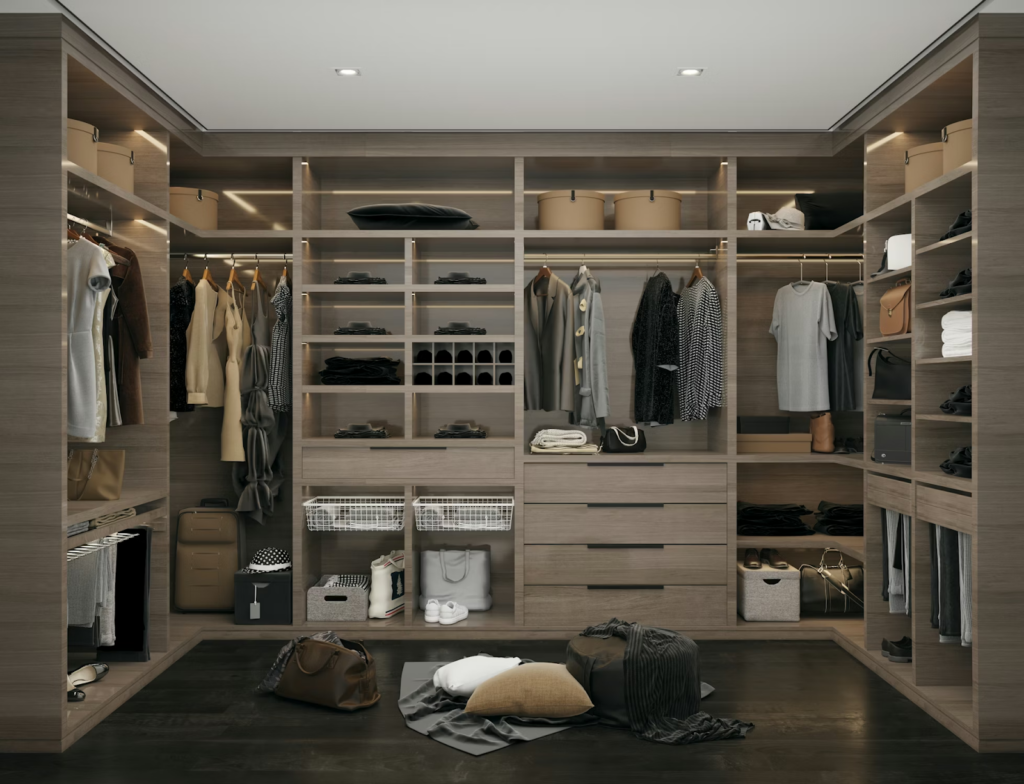
Closet builders have custom shelving systems that maximize every last inch of closet space. Build in exactly the right number of shelves, cubbies and hangers for each item. Don’t let a box of miscellaneous stuff pile up where there’s a custom storage solution for it already.
How To Maintain A Clutter-Free Home Long Term
Decluttering is the easy part. The real work begins when you’ve thrown away and donated all of that excess stuff. Stopping the clutter from coming back for good requires building new habits and mindset.
Rules to prevent clutter from returning:
- One in, one out – for every new item that comes into the house, one item must leave. Simple. This prevents the slow accumulation that does everyone in over time.
- Daily maintenance windows – even 10-15 minutes spent putting things back in their homes every day will keep small messes from ballooning into major disasters.
- Quarterly purges – no matter how well you do it, stuff still accumulates over time. Schedule a regular decluttering session every 3 months to clear the clutter that has built back up.
- Mindful purchasing – ask yourself before buying something: does this item truly add value? The easiest and cheapest clutter to avoid is the clutter that never comes into the house in the first place.
The goal isn’t a perfectly minimalist or clutter-free home. Home is for living in, and some clutter is completely normal. The goal is simply to feel calmer in your home rather than more stressed. More in control rather than overwhelmed.
Wrapping It Up
Minimalist decluttering doesn’t happen overnight. It requires work, patience, and the mental fortitude to part with possessions that no longer serve you.
Quick recap of our minimalist strategy:
- Begin with a minimalist mindset and only keep what adds value
- Work through each room of the house one at a time
- Implement proper storage solutions to keep everything in its place
- Build maintenance habits to prevent clutter from returning
- Schedule regular purge dates to clean out the slow accumulation
The results are worth it. Less clutter means less stress, more time, and an environment that is inviting and that supports your daily life.
Homeowners who make the full commitment to minimalist decluttering report feeling lighter, more focused, and just happier in their home. It’s a transformation anyone can have with the right mindset and effort.
Pick one drawer to start today. The rest will follow naturally.