
There’s a gap between what marketing teams know they should be doing and what they’re actually able to execute. Most marketers understand that video outperforms static content, that platform algorithms favor dynamic formats, and that audiences scroll past anything that doesn’t immediately capture attention. Yet despite this knowledge, many brands still struggle to produce video ads at the volume and velocity required to compete in 2026.
The bottleneck isn’t awareness or intent. It’s infrastructure. Traditional video production demands resources that most teams simply don’t have at the scale needed to meet current market expectations.
[Image Prompt: An infographic-style illustration showing two timelines side by side — one labeled “Traditional” stretching across 6 weeks with few outputs, another labeled “AI-Powered” compressed into days with dozens of video thumbnails. Minimal, flat design with brand colors.]
📊 The Production Math Doesn’t Add Up
Consider what’s required to produce a single 15-second TikTok ad using conventional methods:
- Concept development and scripting: 2-4 hours
- Coordinating talent and locations: 1-2 days
- Shooting: half day minimum
- Editing and revisions: 1-2 days
- Final approval and formatting: additional hours
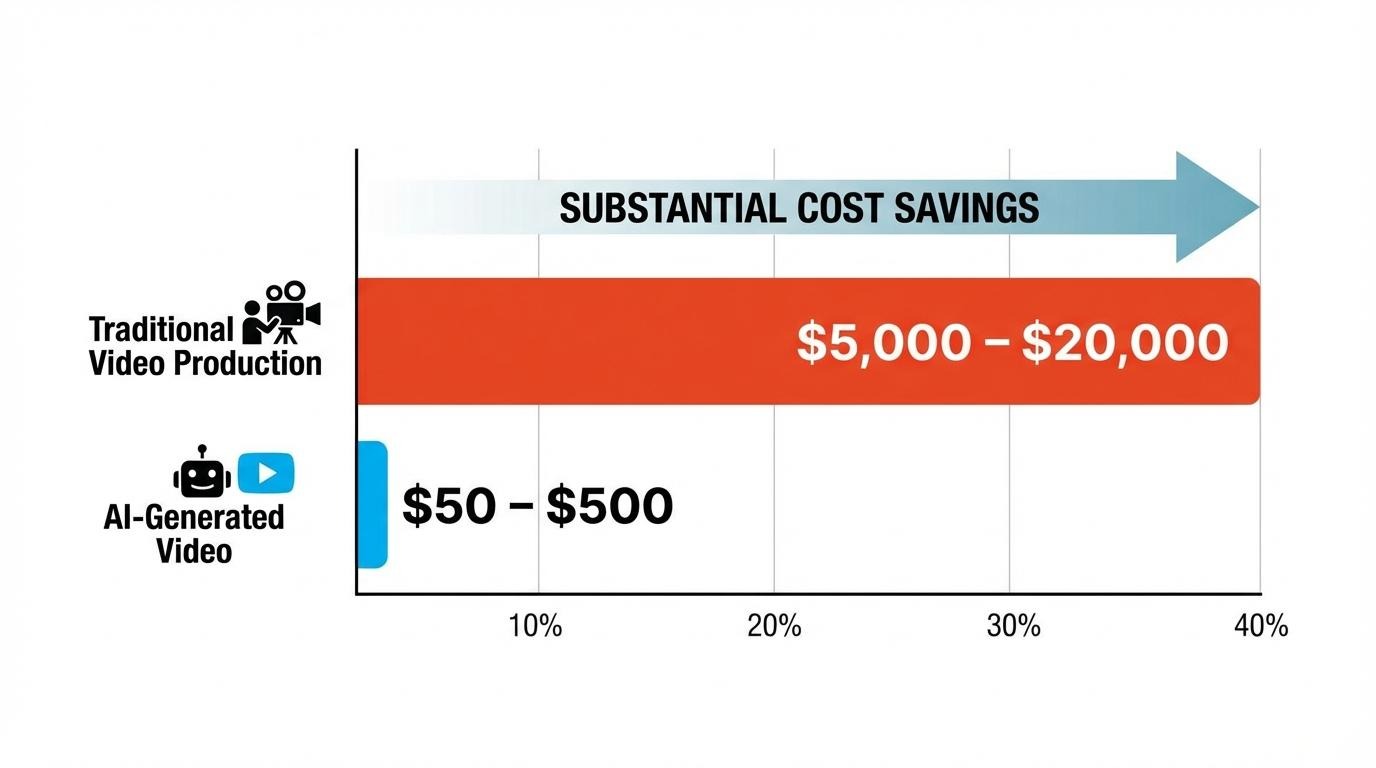
That’s roughly a week of calendar time and anywhere from $2,000 to $10,000 in direct costs, depending on production complexity and market rates. Now multiply that by the number of variations needed for proper A/B testing, the frequency required to combat creative fatigue, and the platform-specific formats necessary for omnichannel distribution.
The math quickly becomes unsustainable for all but the largest brands with dedicated video teams and substantial budgets.
🎯 Where AI Video Generators Change the Equation
[Image Prompt: Close-up of a smartphone screen showing an e-commerce product listing with a video playing — the video shows a handbag rotating smoothly with studio-quality lighting. Clean white background, realistic detail.]
Today, most product videos still go through the same pipeline: a brand hires a creative agency or production house, waits weeks for concepts, endures multiple revision rounds, and finally gets a handful of polished clips. This process made sense when video was expensive and distribution channels were limited. It makes far less sense in 2026, when an AI video generator like HappyHorse 1.0 can produce a testable product clip in under five minutes.
Topview’s AI Video Generator specializes in translating product concepts into finished video content designed for immediate deployment. Users input product images, key messaging, or campaign objectives, and the tool generates platform-native video ads optimized for TikTok, Instagram Reels, YouTube Shorts, and other short-form environments. The output includes proper pacing for hook retention, text overlays timed to platform behavior, and visual rhythms calibrated to audience attention patterns.
This isn’t about replacing creative teams. It’s about removing the logistical friction that prevents those teams from operating at the speed modern platforms demand.
🔄 The Iteration Advantage
In practice, this math reshapes the whole game. A mid-size e-commerce brand running 50 SKUs can now generate platform-specific videos for every product—TikTok, Instagram Reels, YouTube Shorts—and still spend less than a single traditional shoot. That budget freed up goes straight into testing and distribution, where it actually moves the needle.
Cost savings matter, obviously—but the bigger deal is speed. When you can spin up a dozen video variants before lunch, you stop guessing what your audience wants and start actually finding out. That feedback loop is what separates brands that grow from brands that stagnate.
- Test more hooks in parallel ✅
- Generate region-specific variations without additional shoots ✅
- Produce seasonal refreshes without rehiring talent ✅

- Create platform-specific edits for each channel ✅
- Iterate based on performance data instead of gut instinct ✅
It flips the creative process on its head. Old model: you bet big on one concept and pray it works. New model: you throw ten ideas at the wall, see what sticks, then double down on the winners. The cost of being wrong drops to almost nothing.
💡 Real-World Application Patterns
The most effective implementations don’t treat AI video generators as standalone tools. Instead, they integrate them into broader creative workflows where human strategy guides AI execution.
Most marketing teams still hesitate because shipping a “rough” video feels risky. Years of brand guidelines and approval chains have trained everyone to wait for perfection. But the data keeps telling a different story: audiences scroll past polished ads and stop for content that feels real. A slightly imperfect product demo that hits your feed at the right moment beats a cinematic masterpiece that launches three weeks late.
Pattern 2: Rapid Response to Trends When a new format gains traction on TikTok or Instagram, brands using AI can participate within hours rather than weeks. The tool adapts existing product assets to fit emerging trends, allowing brands to ride cultural momentum instead of watching it pass by.
Pattern 3: Personalization at Scale Different audience segments respond to different messaging. AI makes it practical to create tailored video promos for various demographics, psychographics, or purchase behaviors without multiplying production budgets proportionally.
📈 Why This Matters for Performance Marketing
The teams getting the most out of AI video aren’t the ones replacing their entire workflow overnight. They’re running it alongside what they already do—using AI for the high-volume, test-and-learn stuff while reserving traditional production for hero campaigns and brand moments that demand a human touch.
When creative production costs drop by 80-95%, brands can afford to:
- Test more aggressively before committing large media budgets
- Refresh creative more frequently to combat fatigue
- Expand into new markets without proportional cost increases
- Allocate more budget to media spend instead of production
The result is better campaign performance not because the creative is necessarily “better” in an artistic sense, but because brands can iterate faster, test more comprehensively, and optimize more continuously.
🚀 Implementation Reality Check
Adopting AI ad generator tools requires adjusting workflows and expectations. The technology handles execution brilliantly but still requires clear direction. Teams that succeed typically:
Define clear objectives first 🎯 What specific problem is AI solving? Faster production? More testing? Lower costs? Platform optimization? Clarity here determines tool selection and workflow design.
Invest in quality inputs 📸 AI output quality correlates directly with input quality. Better product photography, clearer messaging briefs, and well-structured brand guidelines yield better results.
Build feedback loops 🔁 The real power emerges when performance data informs the next round of AI-generated variations. This creates a continuous improvement cycle where each iteration gets smarter.
Maintain brand consistency ✨ With the ability to generate hundreds of video ads comes the responsibility to ensure they all feel cohesively on-brand. Templates, style guides, and approval processes matter more, not less.
🎬 The Shift From Scarcity to Strategy
Flip the question. Stop asking “how do we make the perfect video?” and start asking “how many angles can we test this week?” Run five versions of a product demo with different hooks, different music, different pacing. Let the audience tell you what works instead of relying on your creative director’s gut feeling.
The most common objection to AI-generated product videos is quality. And yes, if you compare a single AI clip to a single professionally produced clip, the professional version usually looks better. But with models like Seedance 2.0 closing that gap fast, the real comparison isn’t one clip versus one clip—it’s about what you can do with 50 variations versus a single polished piece.
You don’t need to blow up your process to get started. Pick one product category, generate a batch of AI videos for it, and A/B test them against your existing creative. Most teams see clear signal within a week. From there, it’s just a matter of expanding what’s working.
💭 Final Thoughts
The brands pulling ahead in 2026 aren’t the ones with the biggest production budgets. They’re the ones that figured out velocity matters more than polish. They ship more, learn faster, and iterate relentlessly—while their competitors are still waiting on round three of agency revisions.
AI-generated product video isn’t a question of if anymore—it’s how soon. The real risk isn’t adopting too early. It’s waiting until your competitors have already built the testing muscle and audience data that you can’t shortcut. Start messy, learn fast, and let the results compound.