LetsBld Velvet Warble Marble Dance blends rhythm, physics, and tactile play into a single interactive work. The project pairs velvet visuals with warbling sound to move marbles across patterned surfaces. It began as a small studio experiment and grew into shared exhibits, apps, and live shows. The description below explains its concept, mechanics, community, DIY options, and where people can try it in 2026.
Key Takeaways
- LetsBld Velvet Warble Marble Dance combines rhythm, tactile gameplay, and interactive marble motion to create a unique puzzle experience.
- Players guide marbles using timed beats and surface interactions, blending rhythm puzzle mechanics with physical movement.
- The game’s velvet-clad board and glossy marbles create a visually soothing aesthetic that enhances motion perception and gameplay clarity.
- Dynamic sound design uses pitch wobble and reactive audio cues to enrich gameplay and help players follow rhythm patterns.
- Community events and competitive modes foster collaboration and performance alongside gameplay, making the Velvet Warble Marble Dance a versatile cultural experience.
- DIY builders can create mini versions using accessible materials like velvet, micro-actuators, and simple synth patches for an affordable hands-on project.
What The Velvet Warble Marble Dance Is — Concept And Origin
LetsBld Velvet Warble Marble Dance started in a design studio. The team built a velvet-clad board and programmed reactive audio. The creators tested marbles that rolled in sync with warped electronic notes. The name describes the look, the sound, and the motion. Early versions appeared at small galleries and local arcades. The project drew interest from players who liked tactile puzzles and experimental music. The creators refined rules and controls from feedback. The result is a compact game that mixes rhythm timing with physical marble movement.
Core Mechanics: How The Marble Dance Plays Like A Rhythm Puzzle
LetsBld Velvet Warble Marble Dance asks players to guide marbles using beats and surfaces. A track emits timed pulses. The pulses push marbles along channels and across pads. Players tap pads or tilt surfaces to match beat patterns. Correct timing shifts marble paths and triggers new notes. Mistimed actions slow or scatter marbles. The play loop rewards pattern recognition and motor timing. The system logs scores and adapts tempo to player skill. Designers layered simple rules so the play stays clear and deep.
Visual Language And Aesthetic: Velvet, Marbles, And Motion
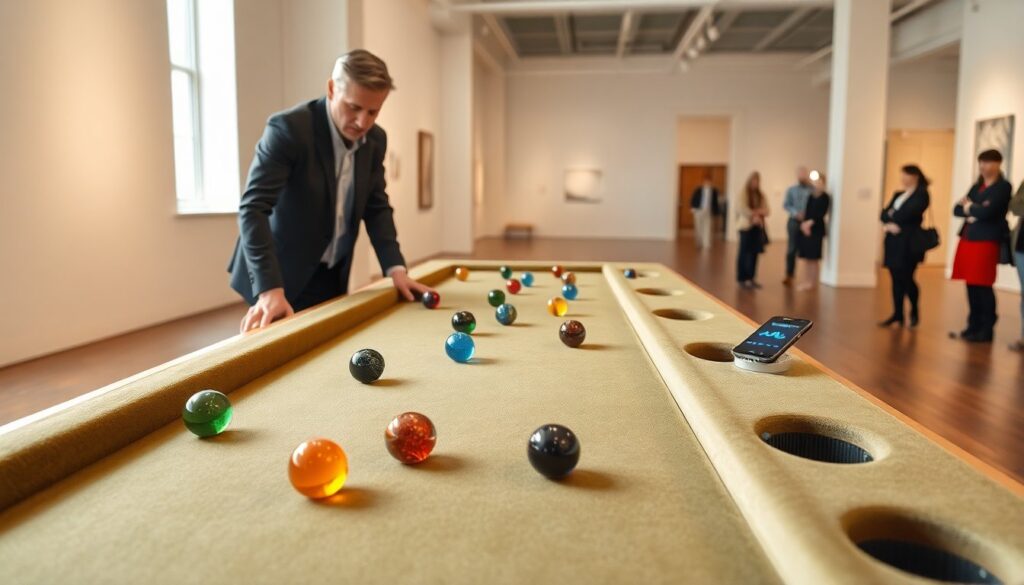
LetsBld Velvet Warble Marble Dance uses velvet to soften light and slow perceived motion. The velvet catches reflections and creates rich contrast with glossy marbles. The marbles carry colored streaks that blur as they roll. The board uses geometric channels and circular wells. Motion trails follow marble paths to show recent beats. Designers keep the palette limited to three or four tones. The result feels calm and precise. Players read motion at a glance and predict marble responses.
Sound Design And The ‘Warble’ Aesthetic: Music That Reacts
LetsBld Velvet Warble Marble Dance pairs sound with marble motion. The system maps marble speed to pitch wobble and filter shake. The warble comes from short LFOs and detuned oscillators. The audio engine reacts to contact, drift, and collisions. Players hear melodic fragments that loop and change as marbles move. The sound stays musical even when play gets chaotic. Audio provides timing cues and emotional texture. The sound design makes the mechanics feel alive and helps players sense rhythm.
Community, Events, And Competitive Modes
LetsBld Velvet Warble Marble Dance attracts makers, musicians, and players. Communities form around score-chasing, remix sets, and marble art. Event hosts run head-to-head matches and collaborative jam sessions. Tournament rules vary by venue and range from single-marble races to multi-track improvisation. The game adapts easily to exhibition spaces and pop-up festivals. Large events mix performance and competition. For example, coverage of weekend festival programming shows how mixed-format events combine concerts and interactive installations, which mirrors how this project appears alongside live culture festival programming.
How To Build Your Own Mini Version: Tools, Assets, And Quick Workflow
LetsBld Velvet Warble Marble Dance supports DIY builds with basic parts. Builders need a thin board, velvet fabric, small marbles, and micro-actuators. A microcontroller reads tempo input and drives solenoids or vibration motors under channels. The audio runs on a simple synth patch on a small computer or phone. Designers recommend free assets for UI and a low-latency audio library. A quick workflow looks like this: cut channels, mount actuators, attach velvet, wire sensors, and load the audio patch. Test tempo and adjust actuator timing until marbles respond predictably. The mini build stays low-cost and playable on a tabletop.
Where To Experience It — Apps, Exhibits, And Live Shows
People can find LetsBld Velvet Warble Marble Dance in apps, galleries, and touring shows. The team released a mobile app that simulates marble physics with touch controls. Museums and galleries host installed tables with full tactile feedback. Touring shows put the work in event halls and arcade nights. Venues list event dates and rules on ticket pages and official sweepstakes pages for sponsors when applicable. For visitors seeking formal rules or sponsor pages tied to events, official sweepstakes documentation provides precise eligibility and prize details for related promotions official sweepstakes rules.