
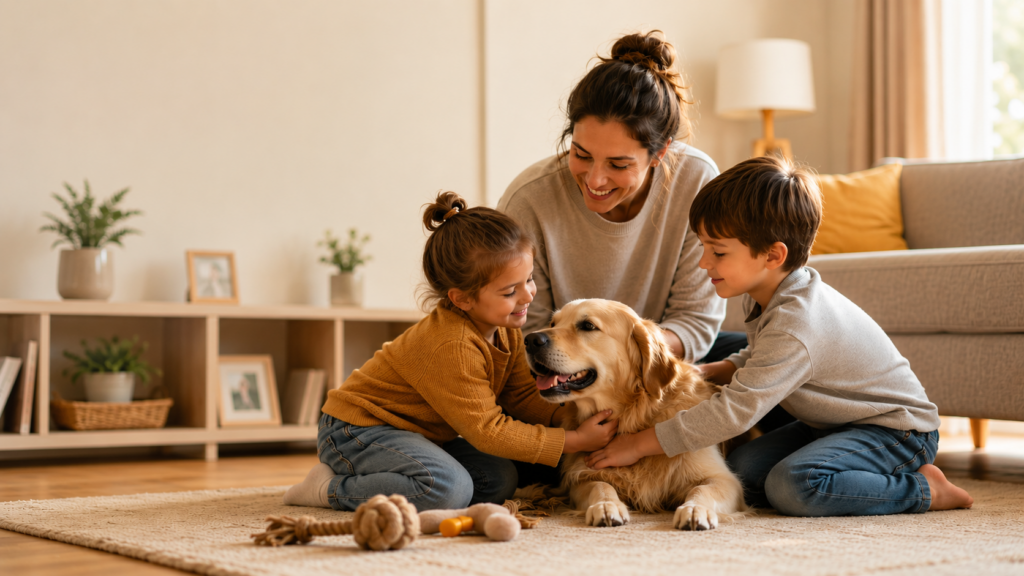
For families with children, a dog is rarely just a pet. From the moment a puppy arrives home, it becomes part of the daily fabric of family life, woven into morning routines, afternoon play sessions, and the quieter rituals that hold a household together. Research consistently shows that children who grow up with dogs develop stronger empathy, better emotional regulation, and a greater sense of responsibility. But the relationship runs both ways. Dogs, too, depend on their human family for something equally essential: structure, safety, and a sense of belonging.
When parents understand what a dog genuinely needs, not just walks and food, but mental engagement, predictable routines, and trust, the whole family benefits. Calmer dogs mean calmer homes. And homes where children learn to communicate respectfully with animals tend to be ones where those same skills carry over into how kids relate to people.
This is why canine wellbeing is not just a pet owner’s concern. It is a family wellness topic.
What Do Dogs Really Need to Thrive in a Family Home?
As a dog trainer and behavior consultant, pet parents often confess to me that they feel their dog’s “bad” behavior stems from stubbornness, spite or dominance, but these are persistent misconceptions that are difficult to dispel.
In reality, many undesirable dog behaviors stem from more down-to-earth reasons, namely boredom and unmet behavioral needs.
Dogs are biologically designed to explore, problem solve, forage and chew. When these forms of mental stimulation are not adequately fulfilled, dogs will craft their own forms of entertainment such as barking, digging and excessive chewing.
Addressing boredom and unfulfilled needs is therefore paramount if you are looking for ways to make your dog happy. While physical exercise certainly matters, mental stimulation is equally important and, in some cases, can be even more tiring than physical activity alone.
Even puppy training basics such as teaching a sit, stay, hand target, or a recall cue, or organizing a fun treasure hunt game, can provide valuable mental enrichment.
Using Structure as a Form of Engagement
Many pet parents perceive training as a chore, but from a behavioral perspective, dogs often experience training sessions as interactive games that provide valuable mental stimulation.
The type of training involved matters a great deal. One of the most overlooked aspects of positive reinforcement dog training is its ability to serve as a form of cognitive enrichment. In many ways, this type of training functions as a mental workout where dogs get to make choices, earn rewards and happily interact with their human family.
Teaching basic dog commands such as sit, stay, come, leave it, drop it, and loose-leash walking creates a framework that helps dogs navigate daily life more successfully while also strengthening the dog-human bond. Keep sessions fun, short and rewarding. This makes the learning process enjoyable rather than stressful.
Research has found that dogs trained using positive reinforcement are often more engaged, optimistic, and eager to participate because the training process itself becomes rewarding.
For families with a new puppy, one of the most common early challenges is managing mouthing and nipping around children. Before moving into more advanced work, parents may find this guide on stopping puppy biting a practical first step, covering the core behaviors that support both safety and confident communication from day one.
Beyond the Backyard: New Ways for Families to Connect with Their Dog
For decades, dog exercise was viewed through a simple lens: leash, walk, repeat. Yet modern dog training recognizes that dogs need more than just physical activity alone.
True wellness in dogs comes from engagement, choice, problem-solving and interactive games that help dogs and their families bond. There are plenty of enrichment options available today, from food puzzles and scavenger hunts to flirt poles and training challenges, all of which encourage thinking, exploration, and emotional regulation.
Many pet parents find it surprising that just a few minutes of purposeful mental work can tire some dogs as much as, or even more than, a routine walk. Mental enrichment and walks fulfill different behavioral needs and ideally should complement one another.
Equally important is learning to read your dog. Understanding canine body language, respecting emotional thresholds, and creating meaningful two-way interactions rather than simply burning energy are great ways to better connect with your dog. For families with children, these skills are especially valuable, as kids who learn to recognize a dog’s signals early tend to build safer and more confident relationships with animals.
Pet parents seeking ways on how to bond with dog often focus heavily on toys, treats or long walks, but emotional connection frequently develops through quieter moments such as peaceful grooming sessions, relaxed sniff walks, calm evening cuddles on the couch or simply sitting together.
Strengthening the human-canine bond involves more than sharing space. Dogs thrive on emotional predictability, gentle communication, cooperative routines and feelings of safety within social relationships.
From a behavioral medicine standpoint, building trust through calm, consistent daily interactions may improve responsiveness to training, increase confidence, and reduce stress-related or anxiety-driven behaviors. In a busy household with children, a dog that feels genuinely secure is calmer, more patient, and far easier to manage day to day.
A Holistic Approach to Canine Wellness
Dogs thrive in families when they have mental stimulation, consistent routines, and a trusting bond with every member of the household. Your dog’s happiness is rarely the result of a single factor. It is a combination of a sharp, engaged mind, a safe environment, and a consistent, trusting relationship with their human family.
When all of these elements align, dogs are more resilient, less anxious, and more adaptable to everyday life. Training sessions built around rewards become opportunities for connection rather than compliance. Mental stimulation through puzzle feeders, scent games, and short daily exercises channels natural canine drives in constructive ways, reducing the behaviors that disrupt family life. And children who participate in a dog’s enrichment and training develop communication skills, patience, and empathy that extend well beyond the relationship with their pet.
Within this broader framework of family wellness, tools like PawChamp support exactly this kind of intentional, evidence-based approach, providing structured programs, expert guidance, and practical resources for every stage of a dog’s life, from puppyhood through the senior years.
Frequently Asked Questions
What age can children start training a dog?
Children as young as five or six can participate in simple training exercises with guidance from a parent. Basic cues like sit or hand target are a good starting point. The key is keeping sessions short, positive, and well supervised.
Why does mental enrichment matter as much as physical exercise?
Mental stimulation engages a dog’s problem-solving and foraging instincts, which physical exercise alone does not address. A dog that is mentally tired is generally calmer, less destructive, and easier to live with in a busy family home.
How does a well-trained dog benefit family?
A dog raised with clear boundaries and positive reinforcement is more predictable and less reactive around children. It also models respectful communication: children who learn to read canine body language and respond appropriately carry those skills into other relationships.